

Downtime isn’t an option when water is essential, but the fear of complex repairs often creates hesitation for new owners. High-quality solar water pumps require very little maintenance, primarily consisting of keeping solar panels clean and conducting simple visual inspections. The core components, especially the brushless DC motor and sealed pump end, are engineered for a long, service-free operational life.
The term “low maintenance” is a key reason why solar water pumps have become a go-to solution for agriculture, livestock, and domestic water in remote areas. Unlike traditional pumps that rely on complex engines or brush-filled motors, modern solar pumps are designed for reliability and longevity in places where a service technician is miles away. However, “low maintenance” does not mean “no maintenance.” Understanding the few simple checks required is the key to maximizing the system’s lifespan and ensuring it delivers reliable water for decades.
The Untouchable Heart: Why the BLDC Motor Needs No Maintenance
Do you think all electric motors need eventual servicing and brush replacements? This old-school maintenance requirement is a major drawback, especially when a motor is located deep underground in a well. Modern solar pumps use a Brushless DC (BLDC) permanent magnet motor, which is a sealed, maintenance-free unit. It has no brushes to wear out, no internal parts needing service, and is designed to operate for its entire lifespan without intervention.
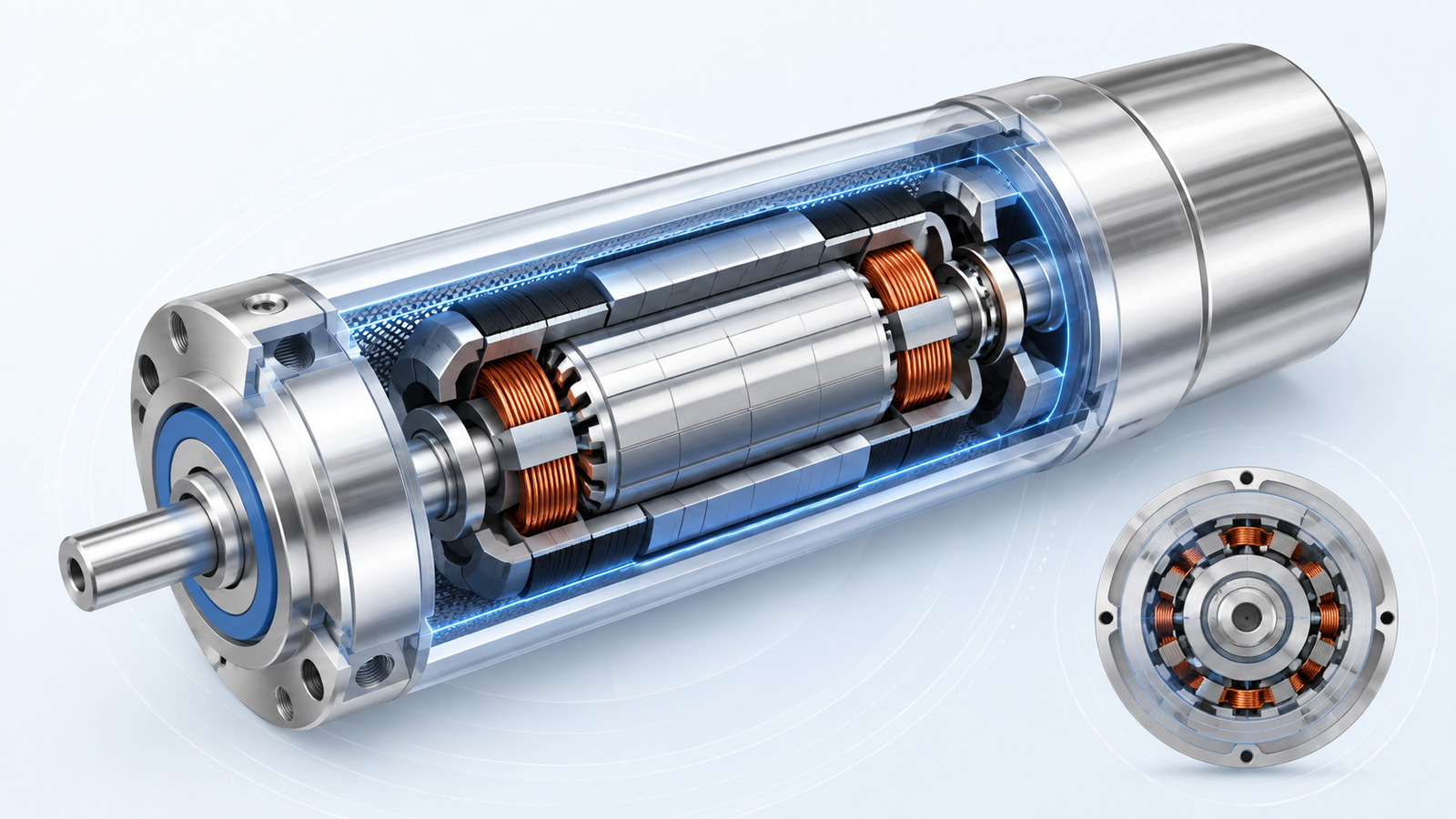
The single greatest advancement in solar pump reliability is the universal adoption of the Brushless DC (BLDC) motor. This piece of technology is the primary reason why solar pumps have moved from a niche product to an essential piece of infrastructure. It fundamentally eliminates the most common failure and maintenance point of older DC motor systems. Traditional brushed motors rely on small carbon blocks (“brushes”) to make physical contact with a spinning commutator to transfer electricity. This contact creates friction, heat, and wear. Over time, these brushes wear down completely, requiring disassembly and replacement to keep the motor running. In a submersible well pump application, this is an expensive and labor-intensive job.
The BLDC motor completely changes this dynamic. Instead of physical brushes, it uses an intelligent electronic controller to switch the direction of the magnetic field, causing the rotor to spin. There are no parts in direct contact that are designed to wear out. This is not just a small improvement; it is a complete re-engineering of the motor for zero-maintenance reliability.
The Engineering Behind a Maintenance-Free Design
The reliability of a BLDC motor comes from its sophisticated yet mechanically simple construction. By eliminating brushes, commutators, and the associated carbon dust, the motor’s lifespan is determined only by the high-quality, sealed bearings, which are typically rated for tens of thousands of hours of operation. These motors are housed in a hermetically sealed stainless steel casing. This protects the internal components from water, sand, and any other contaminants, ensuring the internal environment remains pristine.
Operating at over 90% efficiency, BLDC motors run significantly cooler than their brushed counterparts. Less waste heat means less thermal stress on components, which is a leading cause of premature failure in electronics and mechanical systems. A cooler motor is a longer-lasting motor. The practical benefits of a maintenance-free motor are profound and directly impact the total cost of ownership. With a BLDC motor at its core, the pump’s motor is a “fit and forget” component. Once it is installed at the bottom of the well, it requires no further attention for its entire operational life.
Fuel for the Pump: Simple Solar Panel Care
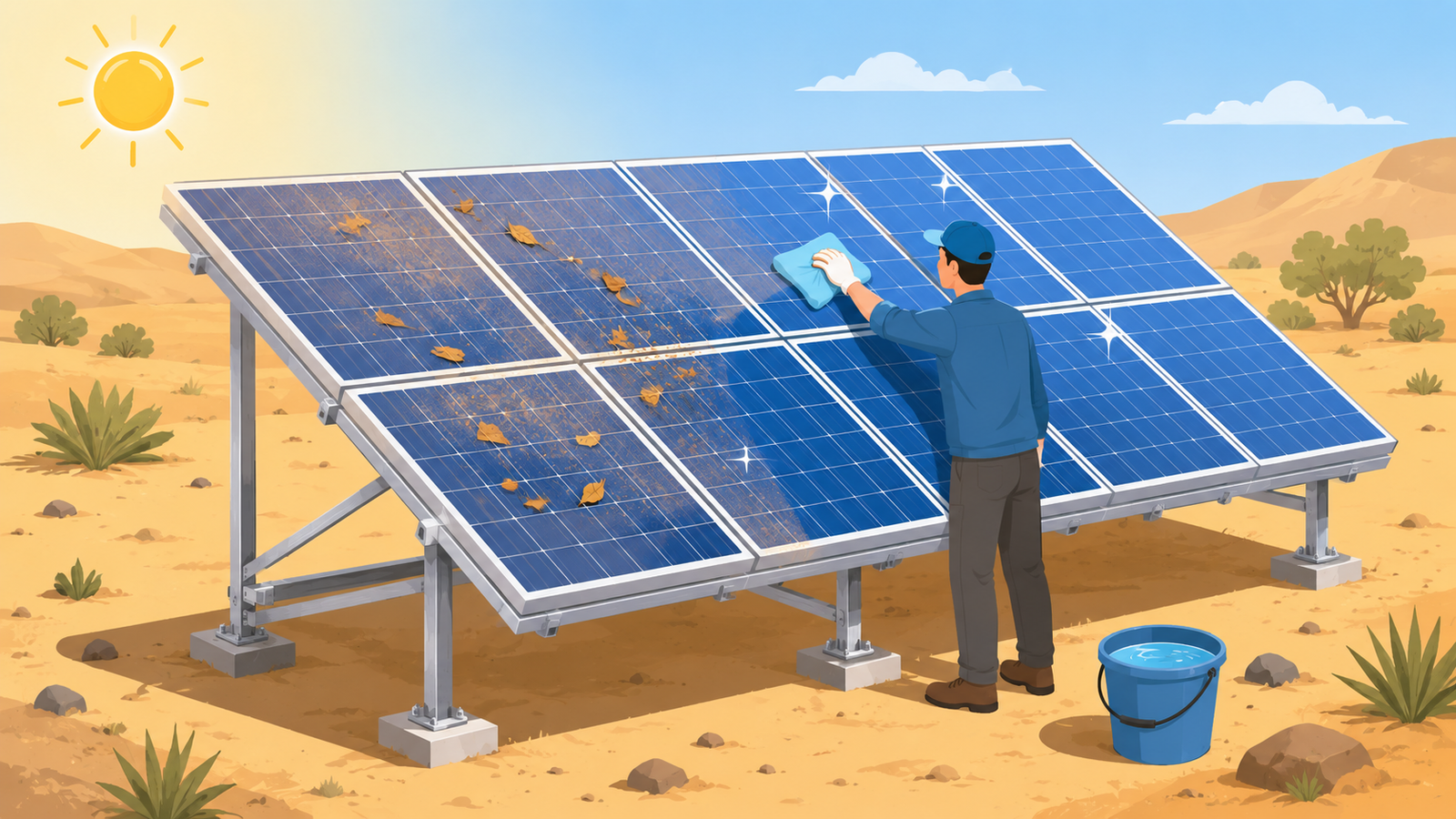
Are your panels covered in a layer of dust or bird droppings? This common issue can choke your pump’s power supply by up to 25%, drastically cutting water flow and making you think the pump itself is failing. Solar panel maintenance involves one primary task: keeping the glass surface clean. Periodically wiping away dust, dirt, leaves, and other debris ensures the panels can absorb the maximum amount of sunlight and power the pump effectively.
The solar panels are the fuel tank of your water pump system. If they can’t collect sunlight efficiently, every other high-tech component in the system will be starved for power. Unlike the sealed, high-tech motor deep in the well, the panels are exposed to the elements 24/7. They collect dust from fields, pollen from trees, residue from rain, and droppings from birds. Even a thin, seemingly transparent layer of grime can significantly reduce the amount of light reaching the photovoltaic cells, directly impacting the pump’s performance.
Studies have shown that dirty solar panels can lose anywhere from 5% to 25% of their efficiency depending on the level of soiling. In arid, dusty regions, the losses can be even more severe. This reduction in power output can translate to slower pump speeds, lower water volume, and an inability for the pump to start in lower light conditions. Fortunately, maintaining the panels is the simplest and most effective task an owner can perform. It requires no special tools or technical knowledge, just a bit of routine attention.
Your Panel Maintenance Checklist
Keeping the panels in peak condition involves both cleaning and inspection. A proactive approach can prevent small issues from becoming larger problems. The frequency of cleaning depends entirely on your local environment. A simple visual check is your best guide; if you can see a noticeable film of dirt on the glass, it’s time to clean.
- Scheduled Cleaning: In dusty, arid, or agricultural environments, clean every 1-3 months. In temperate regions with regular rain, every 6-12 months may suffice. Coastal or industrial areas may require cleaning every 3-6 months due to salt spray or pollutants.
- How to Clean: Use a soft brush or cloth with plain water. For stubborn grime, a small amount of non-abrasive soap can be used, but be sure to rinse it off completely. Never use harsh chemicals or abrasive materials that could scratch the glass.
- Physical Inspection: While cleaning, check for any cracks, chips, or browning on the panel surface. Ensure all bolts and brackets holding the panels are tight and secure. Check that all wires are properly secured and that the insulation is not cracked, frayed, or being chewed on by animals. Take note if any new trees or structures are beginning to cast shadows on the panels during peak sun hours.
Optimize Your System
Unsure About Your Setup?
Our engineers can help you select the right pump type to minimize future maintenance and maximize efficiency for your specific water conditions.
The Workhorse: Maintaining the Pump End
Are you worried about what’s happening to the pump itself, submerged deep underground? Concerns about wear from sand or damage from corrosive water can make anyone anxious about the longevity of this critical, hard-to-access component. Modern solar pumps are designed with sealed, water-lubricated bearings that require no maintenance. However, the lifespan of the pump end is determined by choosing the right pump type for your specific water quality and well conditions.
The “pump end” is the part of the system that does the physical work of moving water. Just like the BLDC motor, it is engineered to be a sealed, long-life component that does not require scheduled servicing like greasing bearings or replacing seals. The bearings inside are lubricated by the very water the pump is moving. Therefore, the only “maintenance” required for the pump end is proactive: selecting the correct model before it is ever installed. The primary factors that cause wear and tear on a submersible pump are abrasion from sand and corrosion from aggressive water chemistry.
Matching the Pump to the Water
Think of pump selection as a long-term maintenance strategy. Each design offers a unique set of advantages tailored to a specific environment. Installing a pump that is not suited for your well is a guarantee of premature failure and a costly replacement job.
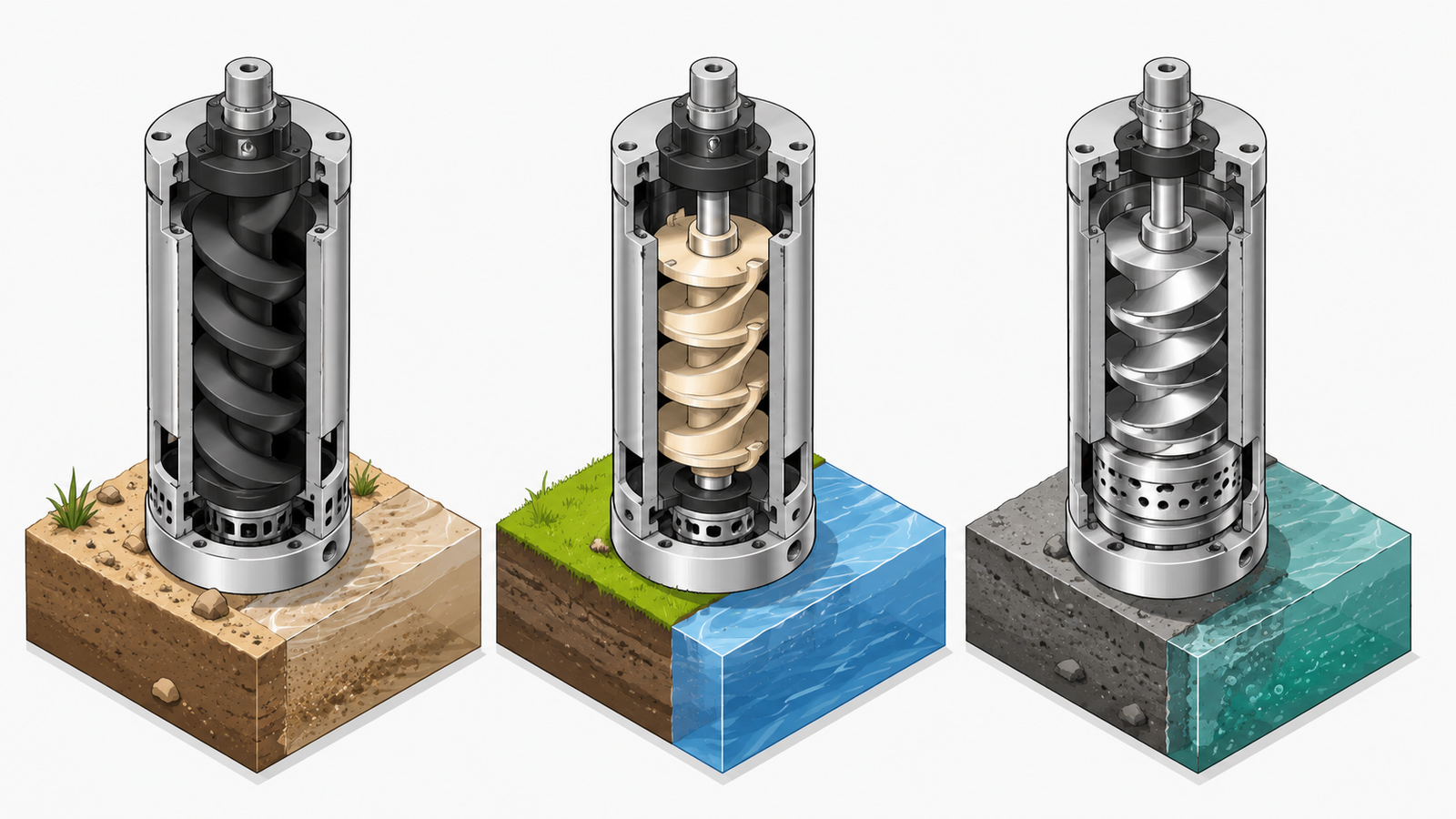
| Pump Type | Best For | Key Maintenance Advantage |
|---|---|---|
| Solar Screw Pump | Deep wells, sandy/silty water | Highly resistant to abrasive wear due to helical rotor design. |
| Plastic Impeller Pump | High flow needs in clean water | Economical and reliable in ideal conditions; handles fine sand moderately well. |
| Stainless Steel Impeller Pump | Corrosive or aggressive water | Maximum resistance to corrosion for longest lifespan in hard water. |
For sandy or silty wells, the Solar Screw Pump uses a helical stainless steel rotor spinning inside a tough rubber stator. This positive displacement action is highly effective at moving water that contains suspended solids without sustaining rapid damage. It sacrifices high flow for extreme durability and high-lift capability. For high-volume needs in clean water, the Plastic Impeller Pump uses precisely molded, wear-resistant plastic impellers. It is highly efficient and economical but susceptible to corrosion in acidic or alkaline water. For aggressive or “hard” water, the Stainless Steel Impeller Pump is built with premium SS304 stainless steel for the impellers, diffusers, and pump body, offering superior resistance to both corrosion and abrasion.
Protecting the System: Wiring and Controller Care
While the motor and pump end are sealed, the electrical connections and controller are exposed to the environment and require periodic attention. The controller is the “brain” of the system and needs to be moisture-proof, high-temperature-proof, and protected from direct exposure to rain. Regular visual inspections can prevent minor issues from escalating into system failures.
Electrical Connection Checks
Inspect cables for aging, fraying, or rodent damage. Rodents are known to chew on wiring, which can cause short circuits or ground faults. Ensure all connections are tight and insulated. If you notice any cracked insulation or exposed wires, replace them immediately to maintain safety and efficiency. Additionally, check that the controller is mounted in a shaded, well-ventilated area to prevent overheating during summer months.
Seasonal and Long-Term Care
Depending on your climate, seasonal adjustments may be necessary to protect your investment. In regions with freezing winters, it is crucial to prevent water from freezing inside the pipes and pump, which can cause catastrophic damage. If the system is seasonally out of use, disconnect the power supply and drain the system if possible. Store removable components in a dry, ventilated place.
For year-round systems in cold climates, ensure that the piping is insulated or buried below the frost line. In summer, monitor the controller for excessive heat buildup. A professional inspection once a year is recommended to check parameters such as motor performance and photovoltaic system voltage. This helps identify any gradual declines in efficiency that might not be visible to the naked eye.
Frequently Asked Questions
How long does a solar water pump last?
A well-maintained solar water pump system can last for 20-25 years. The solar panels are often warrantied for 25 years, and the high-quality brushless motor pump can last 10 years or more, depending on water quality and usage.
Do solar pumps work on cloudy days?
Yes, solar pumps can work on cloudy days but at a reduced flow rate. The pump’s output is directly proportional to the amount of sunlight the panels receive. Modern MPPT controllers help optimize performance even in low-light conditions.
Can solar pumps run at night?
No, standard solar pumps cannot run at night without a battery bank or a hybrid controller connected to an AC power source like the grid or a generator. Most agricultural and livestock applications are designed to pump water into storage tanks during the day for use at night.
What size solar pump do I need?
The required size depends on your daily water needs, the total vertical lift (head), and your geographic location (available sun hours). A professional calculation is recommended to ensure the system meets your specific requirements without being oversized or undersized.
Are solar water pumps worth it?
Yes, for off-grid or remote locations, they are highly cost-effective. They eliminate electricity bills or the fuel and maintenance costs associated with generators, offering a rapid return on investment through low operational costs and minimal maintenance needs.
Conclusion
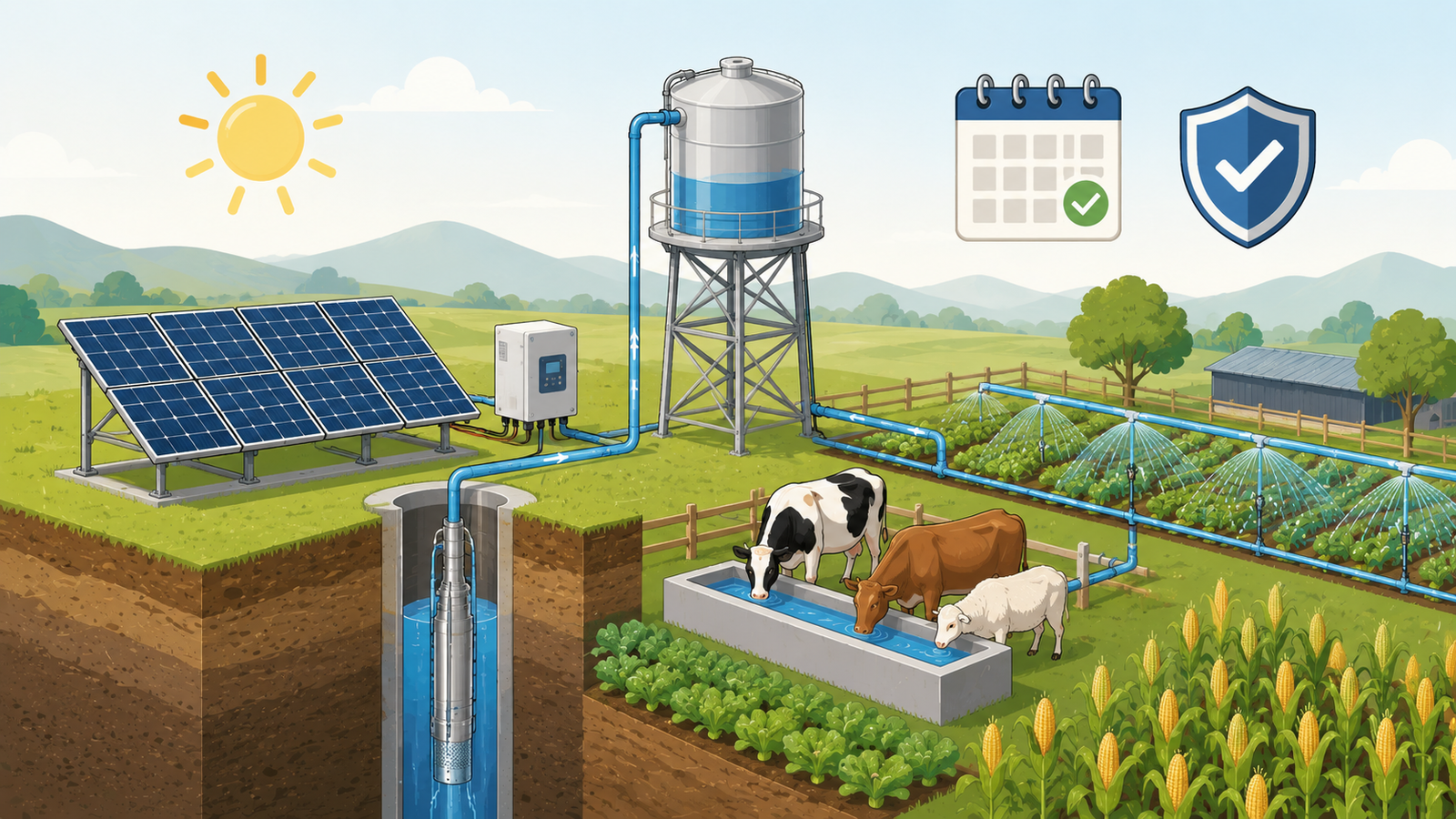
Solar water pumps, built with maintenance-free motors and durable materials, require minimal upkeep. Regular panel cleaning and correct initial pump selection are the keys to decades of reliable service. By understanding the simple maintenance tasks involved—primarily keeping panels clean and inspecting wiring—you can ensure your system operates at peak efficiency. The shift to BLDC technology has removed the most burdensome aspect of pump maintenance, allowing you to focus on your farm or home rather than on repair schedules. With the right setup, your solar water pump will provide a steady, sustainable water source for years to come.
Start Your Project
Ready for Reliable Water?
Let’s discuss your project requirements and ensure you get a solar pump system designed for decades of low-maintenance service.