Accessing a stable water source in remote regions where grid electricity is limited or unreliable presents a significant challenge for farmers, homesteaders, and project managers. Traditional diesel-powered pumps often lead to high maintenance costs, logistical headaches with fuel delivery, and environmental concerns. Manual pumping is labor-intensive and rarely sufficient for modern agricultural or livestock needs. In this context, solar submersible pumps for remote wells or boreholes have emerged as a transformative solution, harnessing the sun’s energy to provide a clean, sustainable, and autonomous water supply.
These systems are specifically designed to extract water from deep underground sources, making them ideal for locations far from utility infrastructure. By eliminating the need for grid connections or fossil fuels, solar submersible pumps offer long-term reliability and significant cost savings. This guide explores the technical advantages, key components, and critical selection factors to help you determine if a solar pumping system is the right choice for your remote water needs.
System Sizing Assistance
Unsure About Your Borehole Requirements?
Sizing a solar pump requires precise calculations of head, flow, and solar irradiance. Share your application details, water source depth, and daily volume needs with our engineering team for a tailored recommendation.
Why Choose Solar Submersible Pumps for Remote Locations?
The decision to switch to solar-powered water extraction is driven by a combination of economic, operational, and environmental factors. For remote sites, the benefits extend beyond simple energy savings to include enhanced independence and reduced infrastructure complexity.
Energy Independence and Reliability
In off-grid areas, reliance on diesel generators or unstable grid connections can disrupt critical operations like irrigation or livestock watering. Solar submersible pumps provide true energy independence by converting sunlight directly into mechanical work. Since water demand in agriculture often peaks during sunny days, there is a natural synergy between solar availability and water needs. Unlike combustion engines that require constant fuel resupply and are prone to mechanical failure, a well-designed solar pump system operates consistently during daylight hours with minimal intervention.
Long-Term Cost Effectiveness
While the initial investment in solar technology can be higher than purchasing a standard electric pump, the lifetime cost is significantly lower. Solar borehole pumps eliminate recurring expenses such as diesel fuel, generator repairs, and grid electricity bills. Additionally, running mains cables to a remote borehole site can be prohibitively expensive, especially over long distances. By avoiding these infrastructure costs and reducing operational expenditures, solar systems often reach a break-even point within a few years, followed by decades of nearly free water pumping.
Environmental and Operational Advantages
Solar pumps use renewable energy, producing zero greenhouse gas emissions and no noise pollution. This makes them suitable for environmentally sensitive areas and helps users meet sustainability goals. From an operational standpoint, submersible pumps offer distinct advantages over surface pumps. They are installed below the water level, which makes them quieter, less prone to freezing in cold climates, and more resistant to storm damage. Furthermore, submersible units do not require manual priming, ensuring immediate water flow when the sun rises.
How Solar Borehole Pump Systems Work
Understanding the mechanics of a solar pumping system is essential for proper sizing and maintenance. Unlike traditional AC systems that may require complex inverters and batteries, modern solar submersible setups are streamlined for efficiency and durability.
Key Components Explained
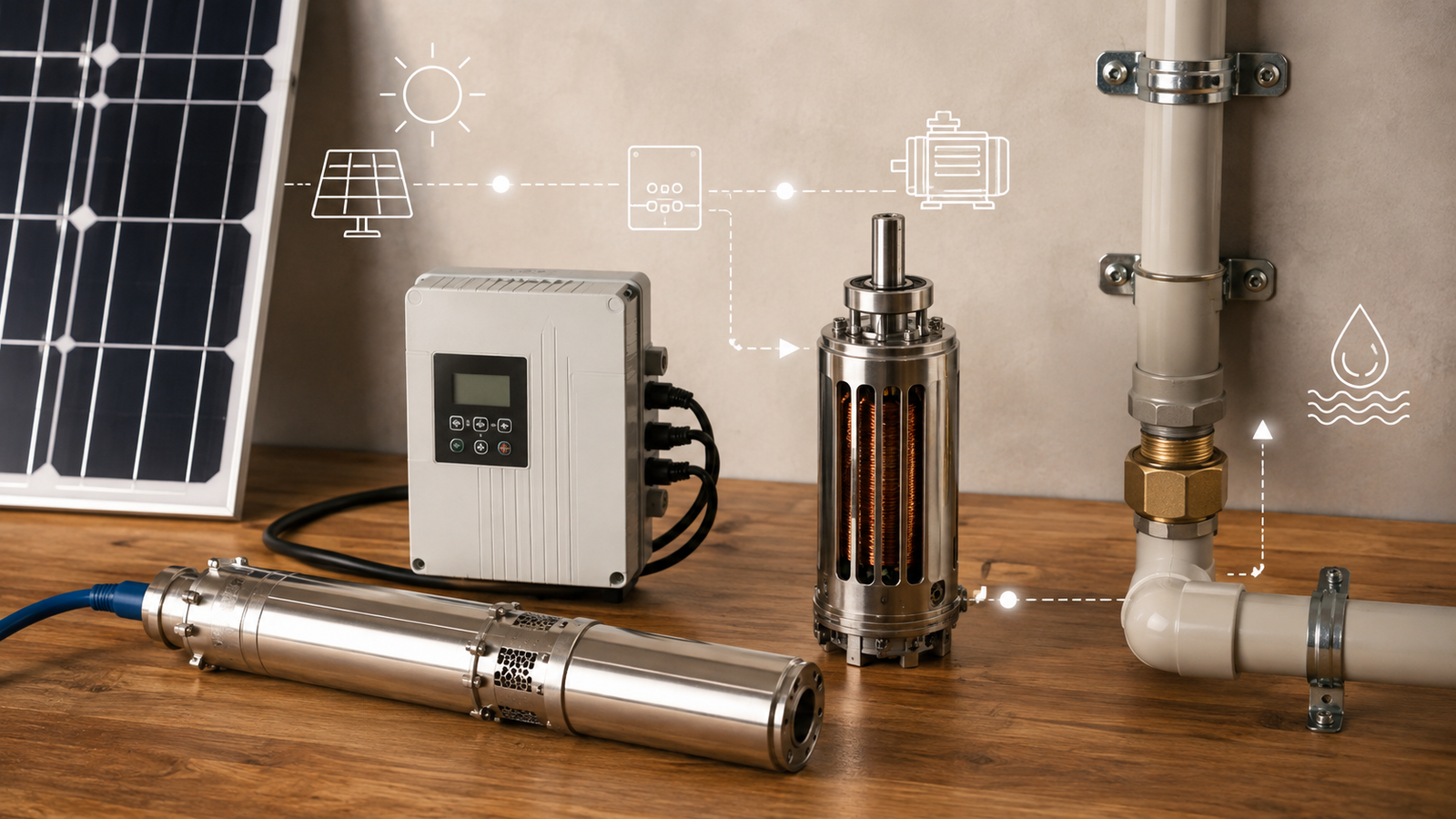
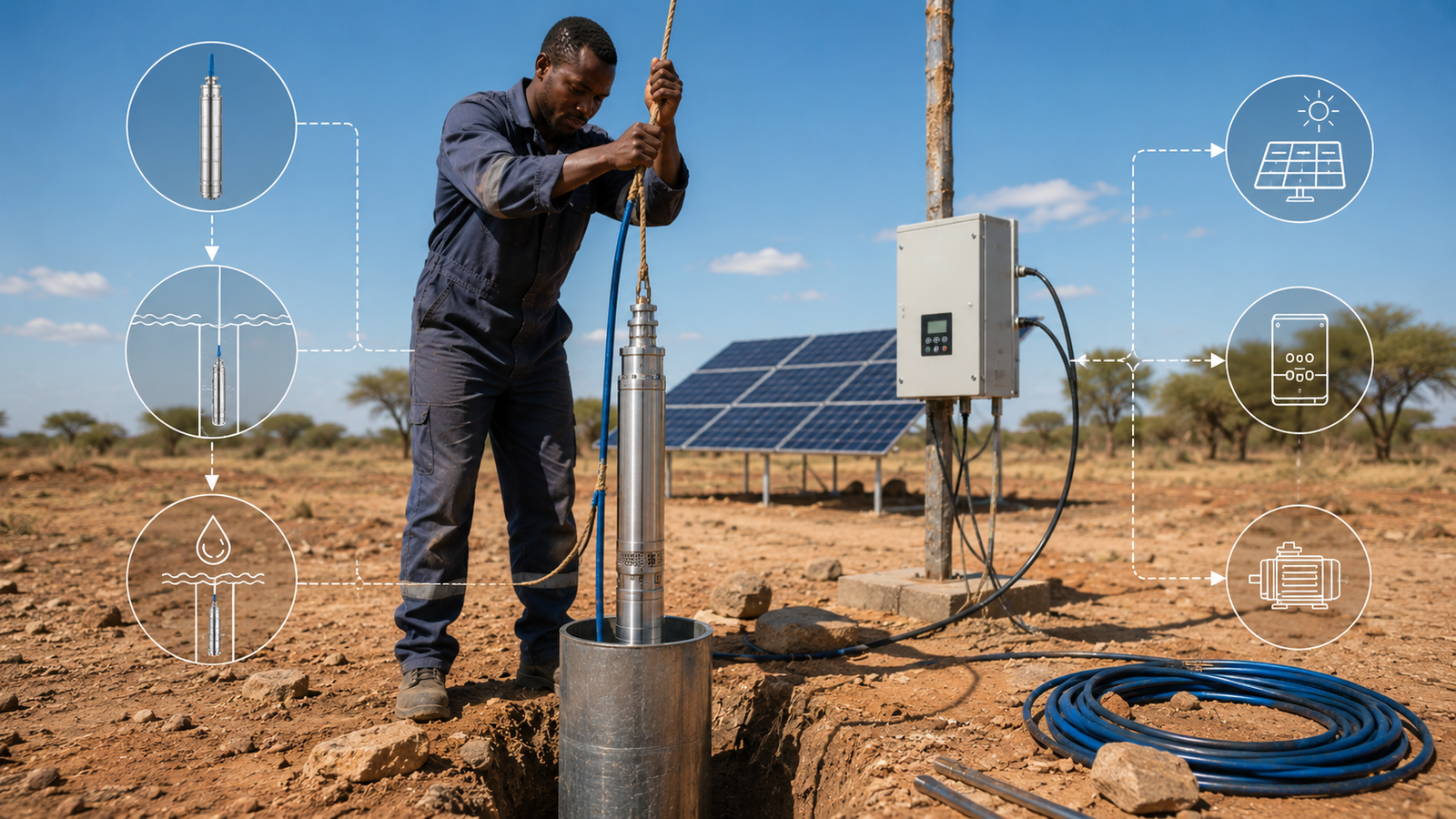
A typical solar borehole pump system consists of three primary components that work in harmony:
- Solar PV Panels: These panels capture sunlight and generate direct current (DC) electricity. The size and number of panels depend on the water demand, borehole depth, and local solar irradiance levels.
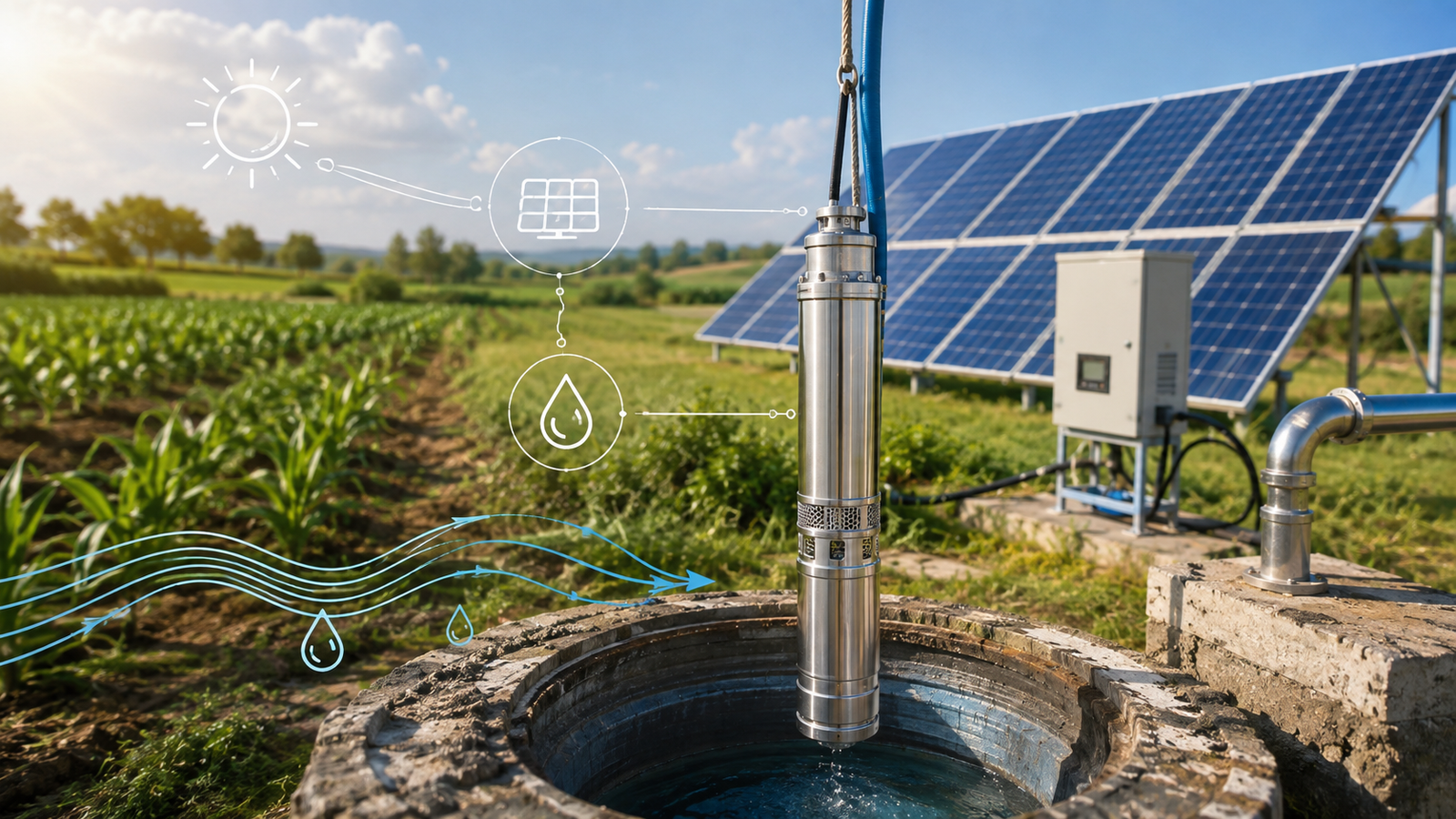
- Submersible Pump: This unit is lowered into the well or borehole. High-efficiency DC submersible pumps, particularly those with brushless motors, are preferred because they maximize water output per watt of energy consumed. They draw water from the aquifer and push it to the surface.
- Pump Controller: Often equipped with Maximum Power Point Tracking (MPPT) technology, the controller regulates the voltage from the solar array to ensure the pump operates at peak efficiency. It also provides critical protection features such as dry-run protection, which shuts off the pump if the water level drops too low, preventing motor damage.
The “Water Battery” Approach
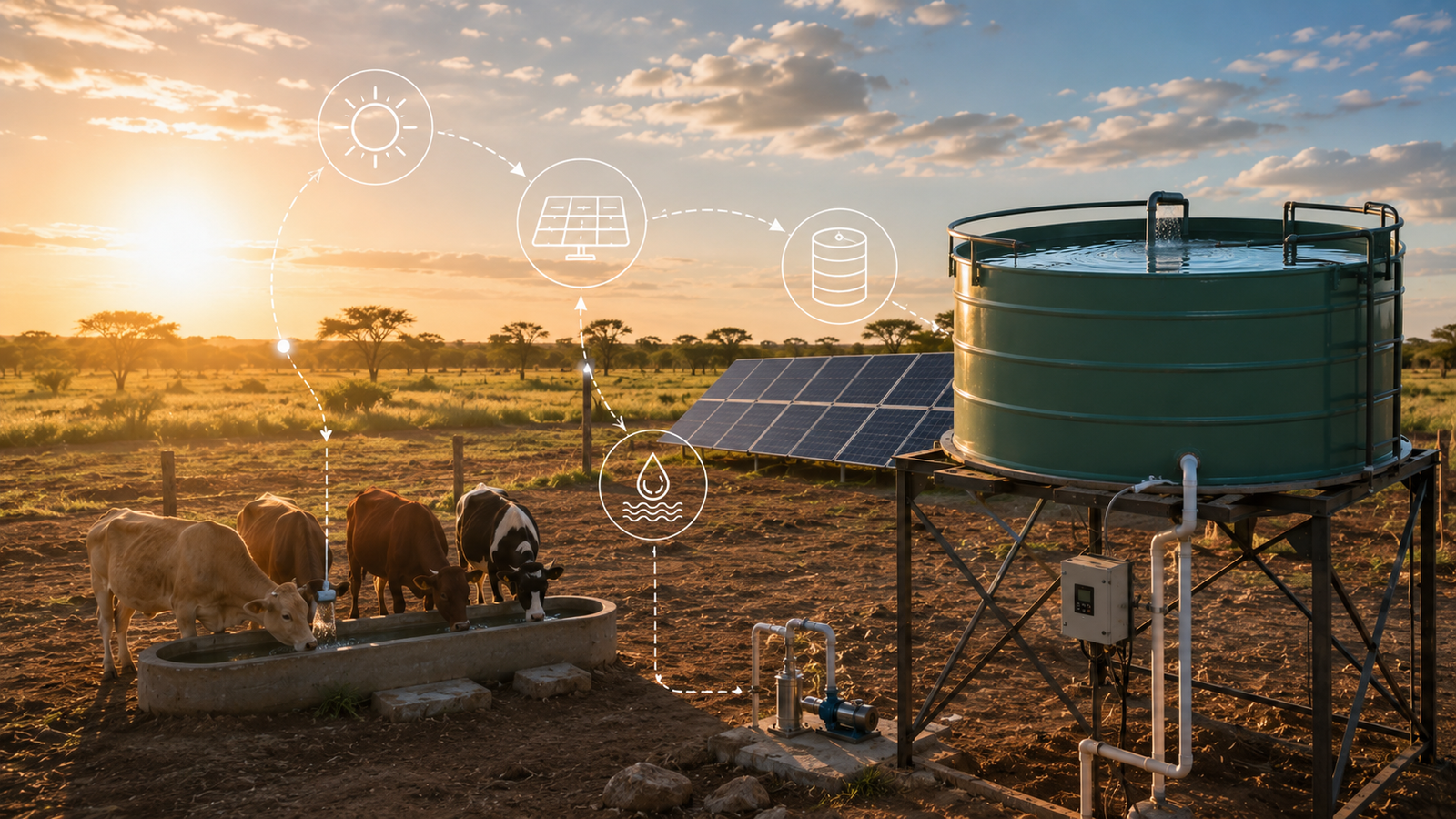
One of the most common misconceptions about solar pumping is the need for expensive electrical battery storage. In most professional off-grid applications, batteries are not utilized. Instead, the system uses a “water battery” approach: water is pumped into raised storage tanks during peak sunlight hours. This stored water can then be distributed via gravity or pressure pumps when needed, even at night. This method is far more efficient, cost-effective, and requires less maintenance than chemical battery banks.
Applications of Solar Submersible Pump Systems
Solar submersible pumps are versatile and can be adapted to various remote water supply scenarios. Their ability to operate independently of the grid makes them a game-changer for several key industries.
Agriculture and Crop Irrigation
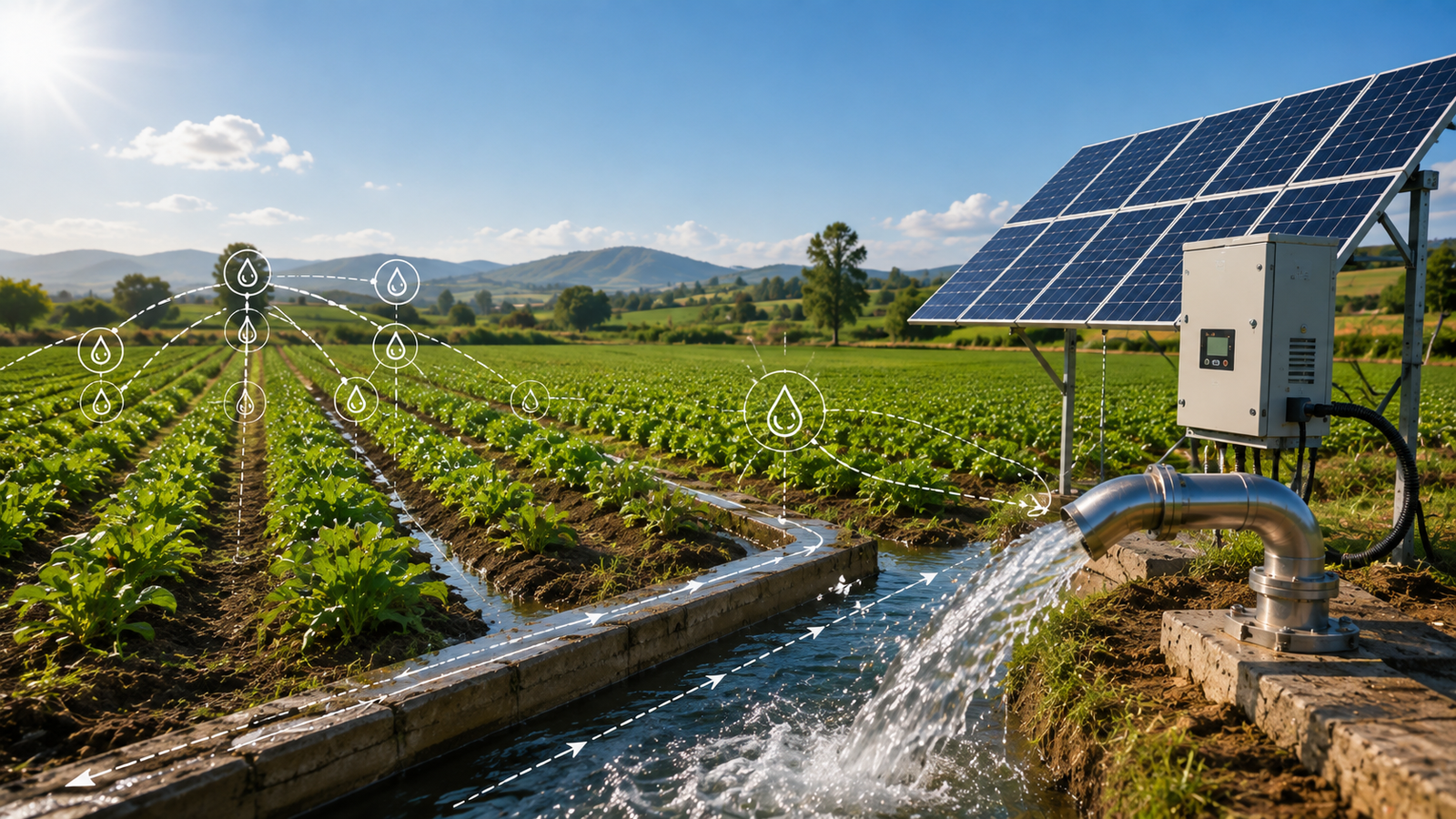
Farmers in arid or semi-arid regions rely on consistent water access for crop survival. Solar pumps can power drip, sprinkler, or flood irrigation systems, allowing for year-round cultivation regardless of fuel availability. By aligning irrigation schedules with peak solar hours, farmers can maximize water output while minimizing energy waste.
Livestock and Cattle Watering
Remote pastures often lack access to centralized water supplies. Solar submersible pumps solve this challenge by drawing water from deep boreholes or wells to fill troughs for cattle, sheep, and other livestock. This eliminates the need for daily manual hauling or expensive fuel transport for generators, ensuring animals have a constant, clean water supply that supports health and productivity.
Remote Drinking Water Supply
For off-grid communities, cabins, or rural households, solar pumps provide a vital resource for drinking water. By extracting water from protected deep wells and storing it in elevated tanks, these systems enable gravity-fed distribution to homes. This improves public health outcomes and reduces the physical burden of water collection, particularly in developing regions or isolated residential properties.
Choosing the Right Pump for Your Borehole
Selecting the correct solar submersible pump requires careful analysis of your specific site conditions. An undersized pump will fail to meet water demands, while an oversized one leads to unnecessary expense. Key factors include borehole geometry, water requirements, and solar resources.
Critical Sizing Factors
| Factor | Description | Impact on System |
|---|---|---|
| Borehole Depth (Head) | The vertical distance from the water surface to the discharge point. | Determines the required pressure capability. Deeper wells need high-head pumps, often helical types, while shallow wells may use centrifugal models. |
| Flow Rate Requirements | The volume of water needed per day (e.g., liters or gallons). | Dictates the pump capacity and solar array size. Higher daily demand requires larger PV arrays and higher-wattage pumps. |
| Borehole Diameter | The internal width of the well casing. | Restricts the physical size of the pump. Standard diameters range from 4 inches to 6 inches or more; the pump must fit comfortably with clearance for cables. |
| Solar Irradiance | The amount of sunlight available at the location. | Affects daily water output. Areas with frequent cloud cover may require oversized panels or MPPT controllers to maintain performance. |
Efficiency Matters
Not all solar pumps are created equal. High-efficiency DC submersible pumps, particularly those using brushless motor technology, deliver more water for the same amount of solar power compared to traditional AC pumps with inverters. This efficiency minimizes the size and cost of the required solar array. Additionally, using pipes with smooth interior walls reduces friction loss, further increasing the effective flow rate of the system.
Start Your Project
Secure Your Independent Water Supply
Ready to eliminate fuel costs and grid dependence? Contact us to discuss your remote well or borehole project. We provide custom quotes and technical support for off-grid solar pumping systems.
Overcoming Common Challenges in Remote Pumping
While solar pumping is highly reliable, it is not without challenges. Understanding these limitations allows for better system design and management.
Weather Dependency and Mitigation
Solar pumps depend on sunlight, meaning performance can fluctuate with weather conditions. Heavy cloud cover or seasonal changes can reduce output. To mitigate this, systems are often sized with a slight oversize margin on the solar array. MPPT controllers also help optimize power extraction during low-light conditions. For critical applications, hybrid systems with a small backup generator or grid connection can ensure uninterrupted supply during extended periods of poor weather.
Initial Investment vs. Lifetime Value
The upfront cost of a complete solar pumping kit—including panels, pump, controller, and mounting structures—can be a barrier for some users. However, when viewed through the lens of total cost of ownership, the value becomes clear. With no fuel costs, minimal maintenance, and a lifespan of 10–20 years or more, solar pumps offer a superior return on investment compared to diesel alternatives. Many governments and development agencies also offer subsidies or incentives to offset the initial capital expenditure.
Conclusion: Is a Solar Pump Right for Your Remote Well?
For remote locations where grid access is unreliable or nonexistent, solar submersible pumps represent the most practical and sustainable solution for water extraction. They offer energy independence, low operating costs, and environmental benefits that align with modern agricultural and residential needs. By leveraging the “water battery” concept and high-efficiency DC technology, users can secure a reliable water supply for irrigation, livestock, or domestic use without the burden of fuel logistics.
Success depends on accurate system sizing based on borehole depth, daily water demand, and local solar conditions. Whether you are managing a large farm or a remote homestead, investing in a properly designed solar pumping system delivers both economic and operational value over the long term. If you are ready to transition to off-grid water independence, assessing your specific site requirements is the first step toward a resilient water future.