
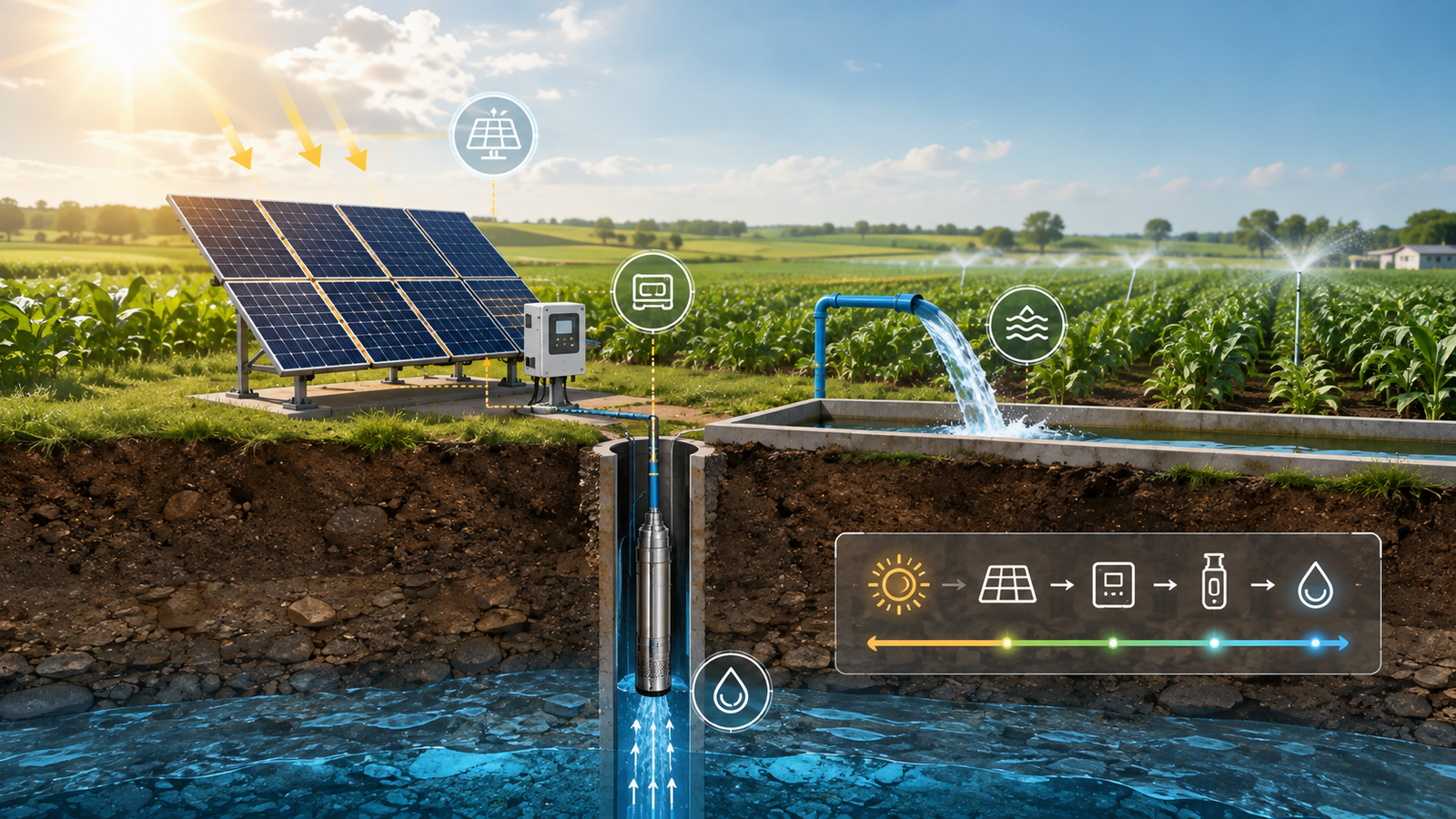
Access to reliable water is fundamental for agriculture, livestock management, and community wellness. In many remote or off-grid locations, traditional power sources are either unavailable or prohibitively expensive to install. This is where solar technology offers a transformative solution. A solar water pump uses energy harvested directly from the sun to move water, eliminating the need for grid electricity or fossil fuels like diesel.
But what exactly is a solar water pump, and how does it function without a standard electrical connection? At its core, the system converts photons from sunlight into direct current (DC) electricity, which powers a motor to lift water from a source such as a well, borehole, or river. This process is not only environmentally clean but also increasingly cost-effective due to advancements in photovoltaic technology. In this guide, we will break down the working principles, essential components, and various types of solar pumping systems to help you understand if this technology is right for your needs.
System Design Support
Need Help Sizing Your Solar Pump?
Share your water source depth, daily volume needs, and available sunlight conditions. Our engineers will recommend the right components for your application.
The Core Working Principle: From Sunlight to Water Flow
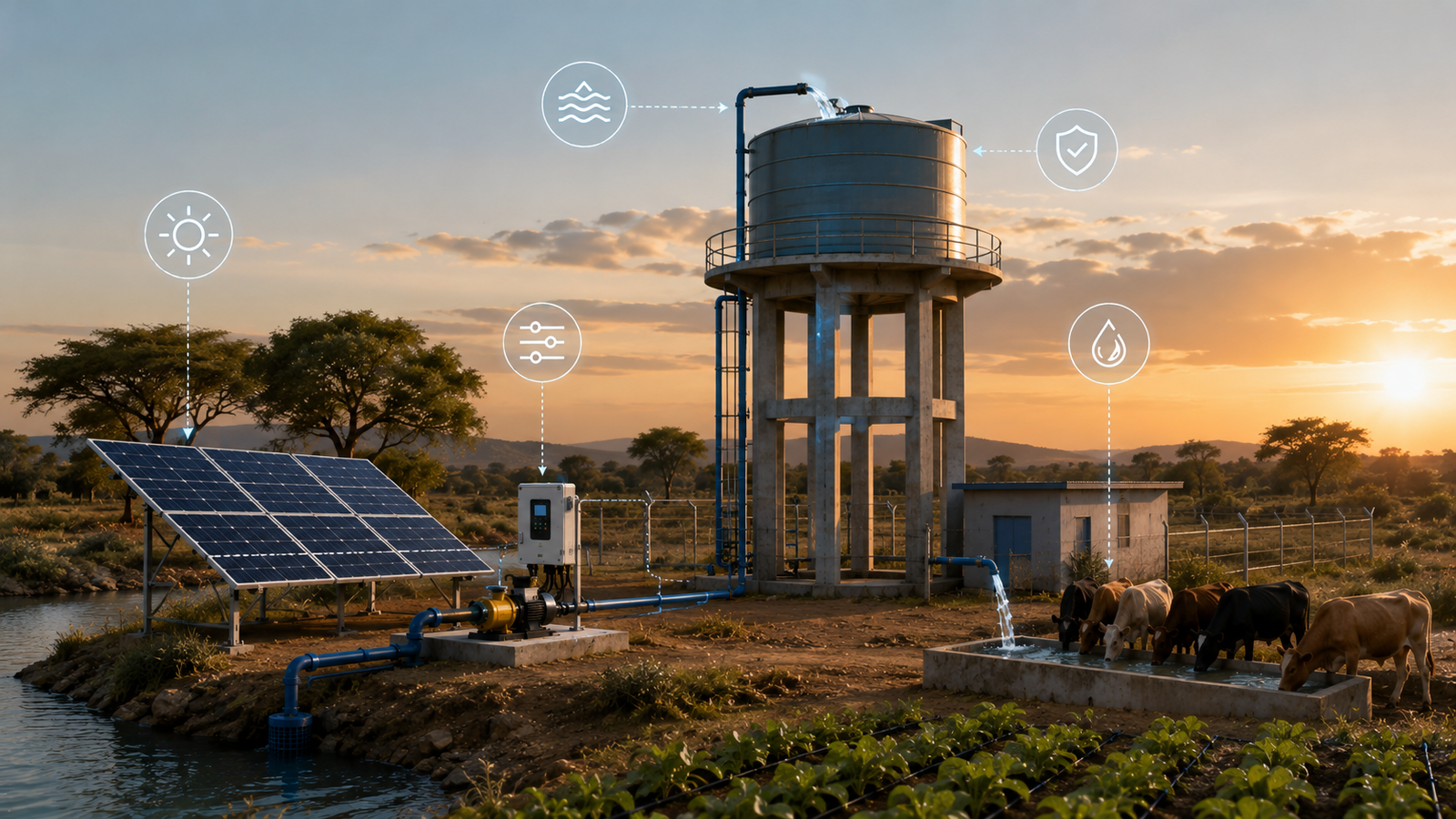
The operation of a solar water pump is based on a straightforward energy conversion chain. Unlike conventional pumps that rely on alternating current (AC) from a utility grid or mechanical energy from a combustion engine, solar pumps utilize renewable solar energy. The process begins when sunlight strikes the surface of solar photovoltaic (PV) panels. These panels contain semiconductor materials that absorb photons and release electrons, generating direct current (DC) electricity.
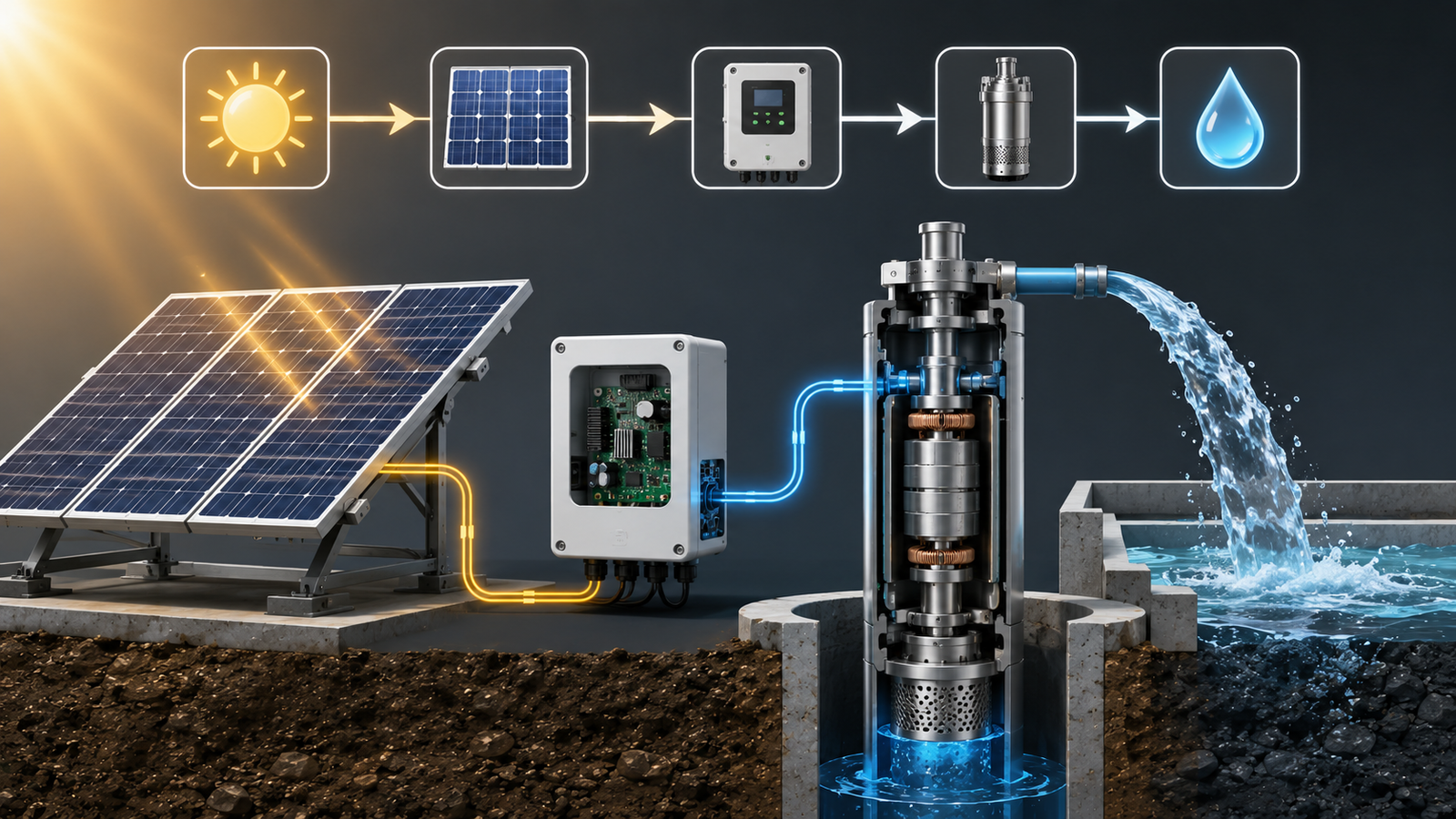
This DC electricity is then directed to a pump controller, which acts as the brain of the system. The controller regulates the voltage and frequency of the power supplied to the pump motor, ensuring optimal performance even as sunlight intensity fluctuates throughout the day. If the pump motor requires AC power, an inverter converts the DC electricity from the panels into AC. Finally, the motor drives the pump impeller, creating the pressure needed to lift water from the source and transport it through pipes to a storage tank or directly to irrigation lines. This seamless integration of components allows for autonomous operation, often requiring no human intervention once installed.
Key Components of a Solar Pumping System
Understanding the individual parts of a solar pumping system is crucial for proper sizing and maintenance. Each component plays a specific role in ensuring efficiency and longevity.
Solar Panels (PV Array)
The solar panels are the primary energy source. They capture sunlight and convert it into electrical energy. The size and number of panels required depend on the pump’s power rating, the total dynamic head (vertical lift), and the desired flow rate. High-efficiency monocrystalline panels are commonly used due to their superior performance in limited space.
Pump Controller
The pump controller is a critical device that manages the power flow between the solar panels and the pump. It performs several vital functions: it maximizes energy harvest using Maximum Power Point Tracking (MPPT), protects the pump from dry running by monitoring water levels, and prevents damage from overvoltage or undervoltage conditions. Advanced controllers can also interface with sensors to automate system operations, such as stopping the pump when a storage tank is full.
The Water Pump Motor
The motor converts electrical energy into mechanical energy. Solar pumps typically use brushless DC motors or AC induction motors. DC motors are highly efficient and can connect directly to the solar panels via a controller, making them ideal for smaller to medium-sized applications. AC motors are often used for larger, high-power systems and require an inverter to operate.
Inverter (Optional)
An inverter is necessary only if the pump motor operates on AC power. It converts the DC electricity generated by the solar panels into AC electricity. While this adds a component to the system, it allows for the use of robust, industrial-grade AC pumps for large-scale irrigation projects.
Storage Tank and Pipes
Since solar pumps only operate during daylight hours, a water storage tank is often recommended. This acts as a “battery” for water, allowing users to access water at night or during cloudy periods. Pipes transport the water from the source to the point of use, and their diameter must be correctly sized to minimize friction loss.
Types of Solar Water Pumps: Which One Do You Need?
Selecting the right type of solar pump depends on your water source depth, volume requirements, and application. The two primary categories are submersible and surface pumps, each with distinct advantages.
Submersible Solar Pumps
Submersible pumps are designed to be placed underwater, typically inside a well or borehole. They are ideal for deep water sources where the water level is significantly below the ground surface. Because they push water up rather than pulling it, submersible pumps are more efficient for high-lift applications. They are protected from external weather conditions and are generally quieter since the motor is cooled by the surrounding water.
Surface Solar Pumps
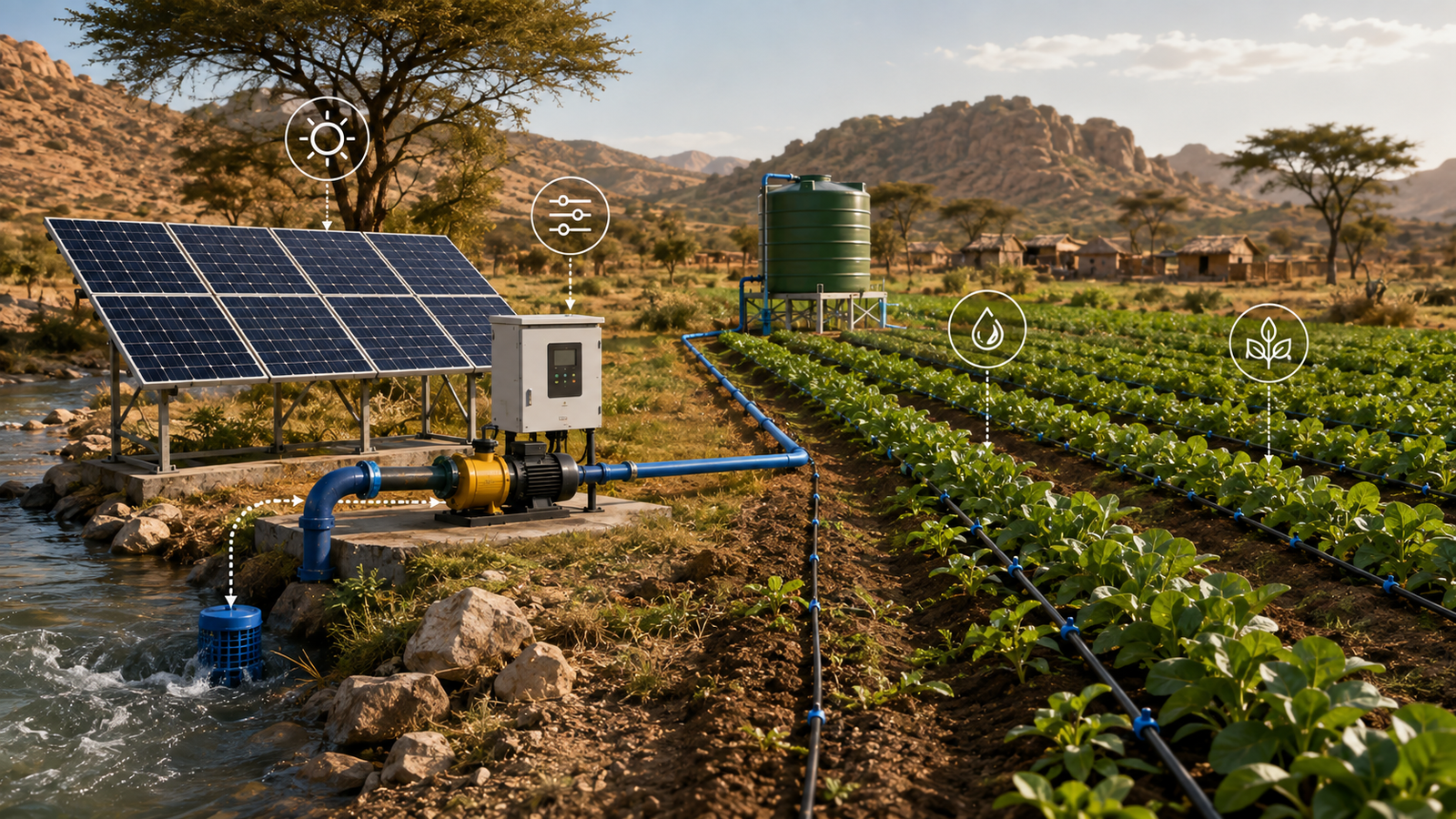
Surface pumps are installed above ground, near the water source such as a river, lake, or shallow well. They are easier to install and maintain since they are readily accessible. However, they are limited by suction lift capabilities, usually effective only for water sources within a few meters of the pump. Surface pumps are commonly used for flood irrigation, transferring water between tanks, or supplying water from shallow open sources.
DC vs. AC Solar Pumps
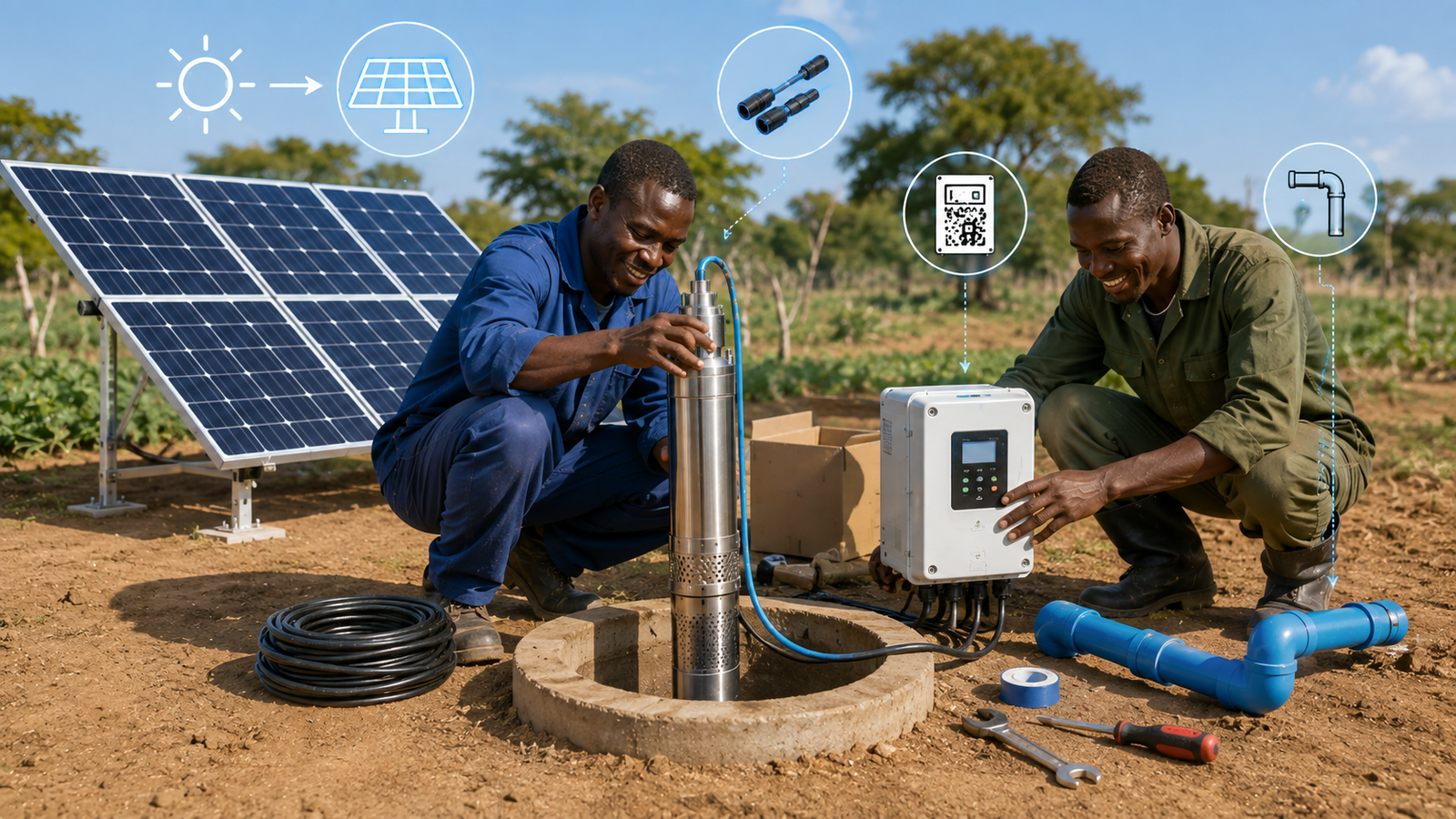
DC solar pumps operate directly on direct current from the solar panels. They are highly efficient because they do not require an inverter, reducing energy loss and system complexity. They are best suited for small to medium-scale applications. AC solar pumps, on the other hand, require an inverter to convert DC to AC. While slightly less efficient due to conversion losses, AC pumps are powerful and versatile, making them suitable for large-scale agricultural irrigation and commercial water supply systems.
Why Choose Solar? Key Benefits for Users
Transitioning to solar-powered water pumping offers numerous economic and environmental advantages over traditional diesel or grid-connected systems.
- Economical Operation: Once installed, solar pumps have zero fuel costs. Sunlight is free and abundant, leading to significant long-term savings compared to the recurring expense of diesel or petrol.
- Low Maintenance: Solar pumping systems have fewer moving parts than diesel engines. There are no oil changes, filter replacements, or engine repairs required, resulting in lower maintenance costs and less downtime.
- Eco-Friendly: Solar pumps produce zero greenhouse gas emissions during operation. They provide a clean, sustainable alternative to fossil fuel-based pumping, helping to reduce the carbon footprint of agricultural activities.
- Remote Accessibility: Solar pumps can be installed in any location with access to sunlight, regardless of proximity to the electrical grid. This makes them ideal for remote farms, rural communities, and off-grid homesteads.
- Reliability and Automation: With modern controllers, solar pumps can operate automatically. Sensors can detect water levels in tanks or wells, turning the pump on and off as needed without manual intervention.
Common Applications
Solar water pumps are versatile and serve a wide range of applications across different sectors.
Agricultural Irrigation
Farmers use solar pumps to irrigate crops using drip or sprinkler systems. This ensures consistent water supply independent of rainfall or grid availability, leading to higher crop yields and improved food security.
Livestock Watering
Ranchers rely on solar pumps to provide fresh water to cattle, sheep, and other livestock in remote pastures. Automated systems ensure that troughs remain filled, reducing labor and improving animal health.
Domestic Water Supply
In rural areas without grid access, solar pumps provide safe drinking water for households. They can draw water from deep boreholes and store it in elevated tanks for gravity-fed distribution.
Environmental Restoration
Solar pumps are used in ecological projects to irrigate vegetation in barren hills or areas prone to desertification. By providing consistent water, they help stabilize soil and prevent erosion.
Limitations and Considerations
While solar pumps offer many benefits, it is important to consider their limitations. The initial upfront cost can be higher than that of a simple diesel pump, although this is offset by long-term operational savings. Additionally, solar pumps only generate power during daylight hours. To ensure water availability at night or during extended cloudy periods, users should incorporate water storage tanks into their system design. Proper sizing of the solar array and pump is essential to meet daily water demand under local solar irradiance conditions.
Conclusion
Solar water pumps represent a reliable, sustainable, and cost-effective solution for water access in both remote and grid-connected areas. By harnessing the power of the sun, these systems eliminate fuel costs, reduce maintenance burdens, and provide a clean energy alternative for irrigation and domestic use. Whether you need a submersible pump for a deep well or a surface pump for a river, understanding the components and working principles helps in selecting the right system for your specific needs.
At Sunbeam Pump, we specialize in high-quality solar pumping solutions tailored to diverse applications. Our team of experts can help you design a system that maximizes efficiency and meets your water requirements.
Start Your Project
Ready for Reliable Off-Grid Water?
Contact Sunbeam Pump today for a customized quote and technical support for your solar water pumping system.