
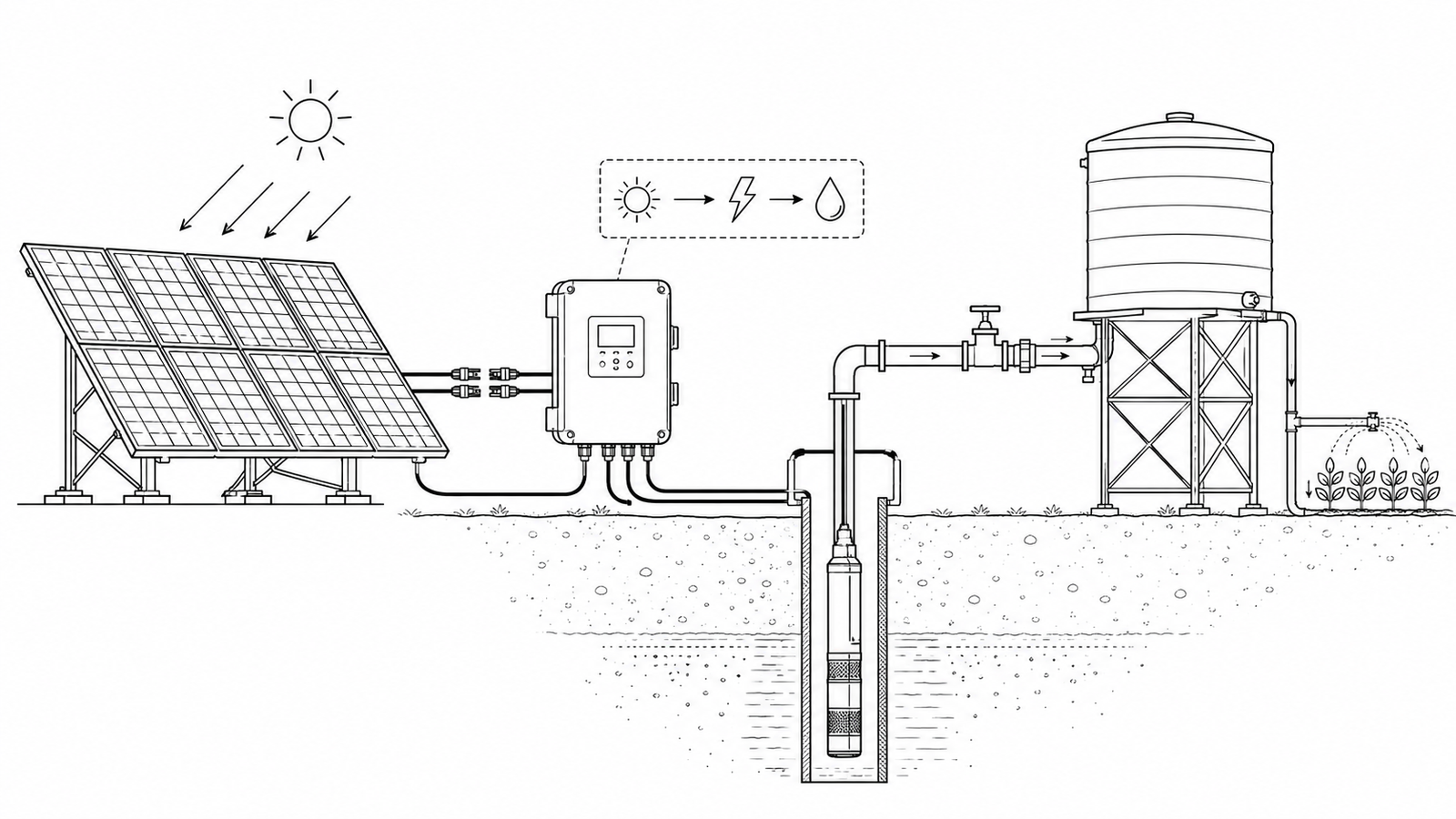
Solar water pumps have emerged as a transformative solution for water management in agriculture, livestock watering, and remote domestic supply. By harnessing renewable energy, these systems eliminate the need for grid electricity or expensive diesel fuel. However, the efficiency and longevity of a solar pumping system depend heavily on the correct selection and integration of its core parts. Understanding the key components and working principles of solar water pumps is essential for engineers, farmers, and project planners aiming to design reliable, cost-effective water infrastructure.
Core Components of a Solar Water Pumping System
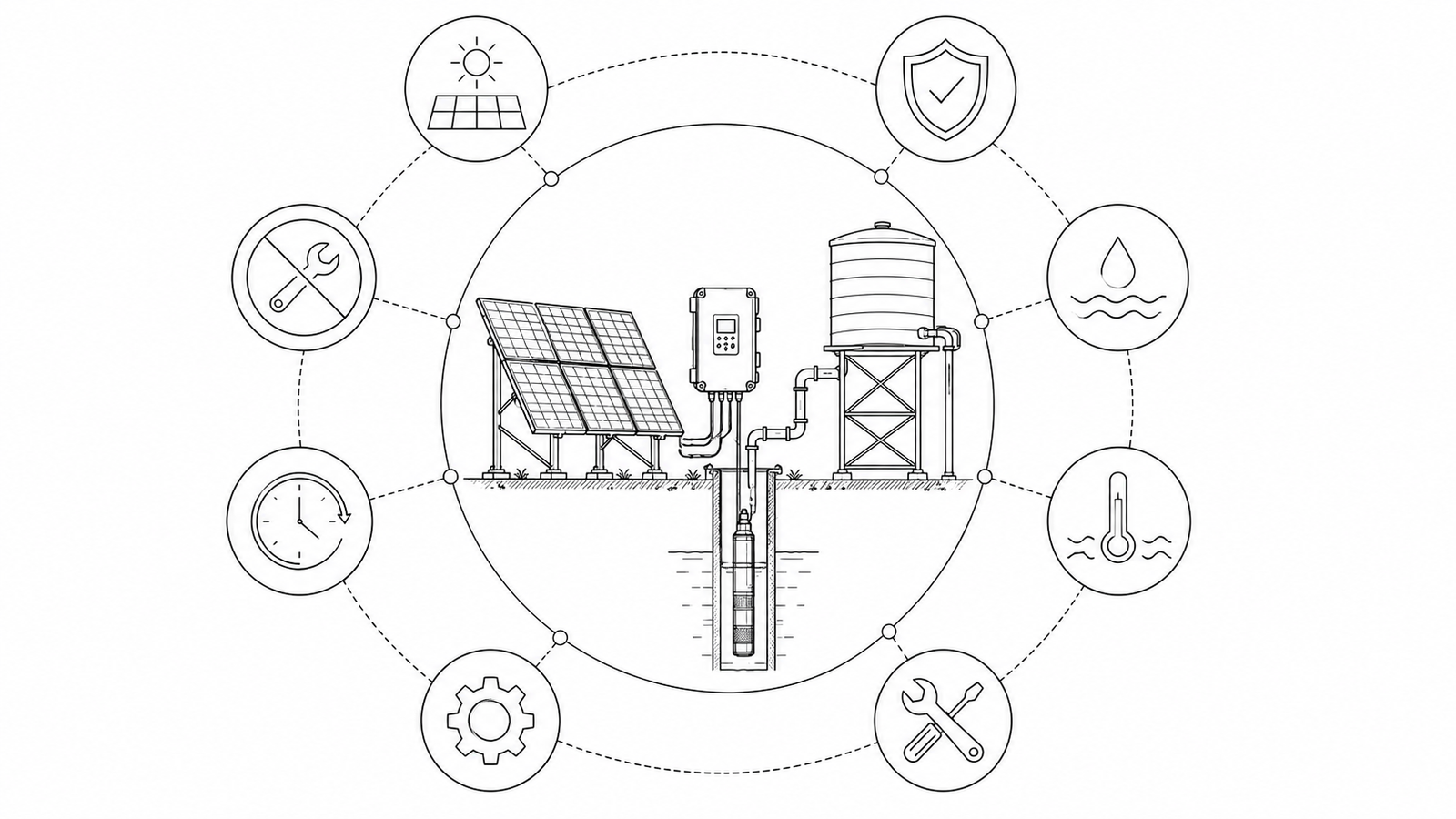
A solar water pump is not merely a motor attached to a panel; it is an integrated ecosystem of specialized hardware. Each component plays a critical role in converting sunlight into hydraulic energy. A well-designed system balances these elements to ensure optimal performance under varying environmental conditions.
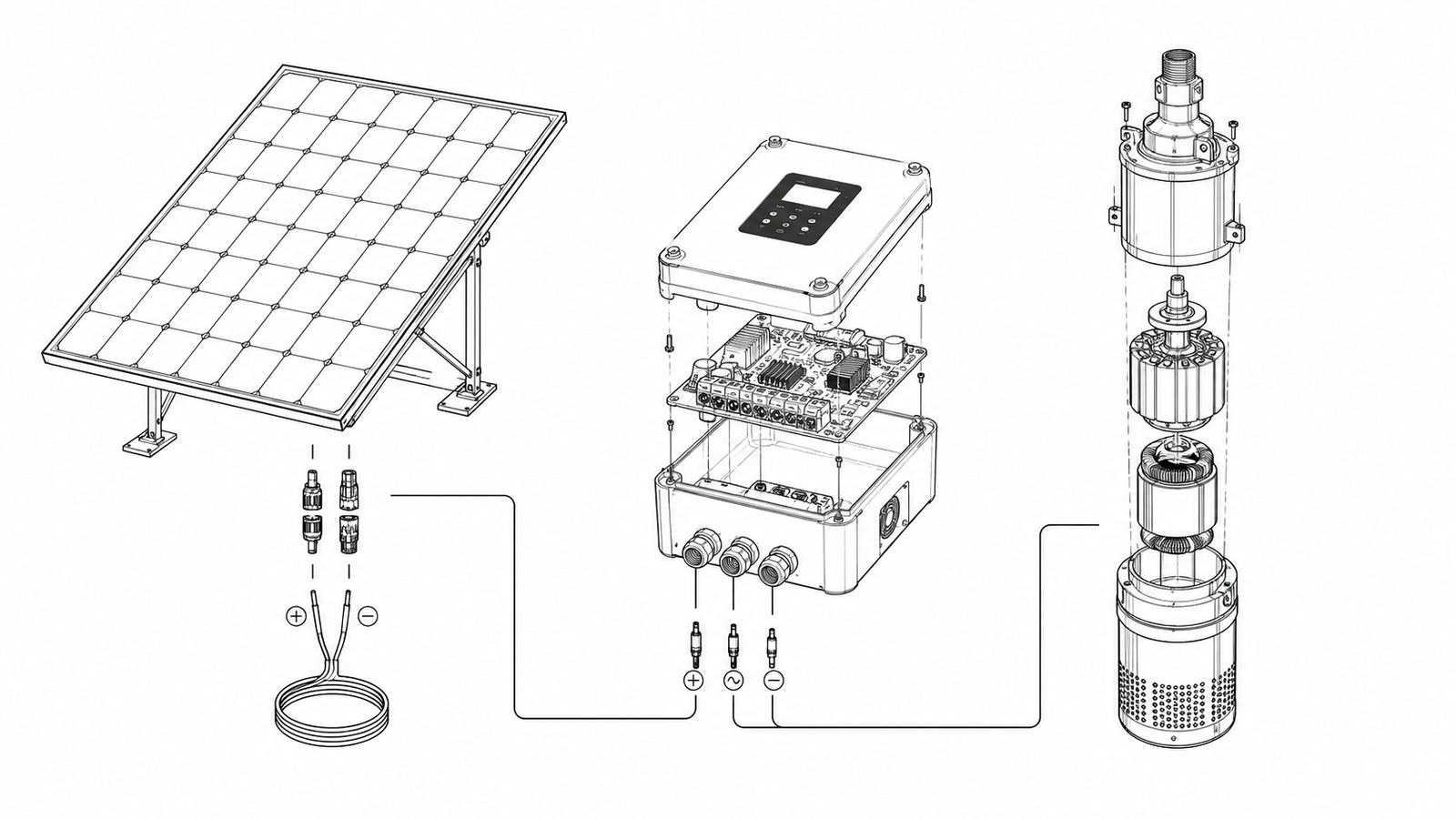
Photovoltaic (PV) Modules: The Energy Source
The photovoltaic array is the primary power source for the system. These panels capture sunlight and convert it into direct current (DC) electricity. The efficiency of this conversion depends on the quality of the solar cells, typically monocrystalline or polycrystalline, and their orientation relative to the sun.
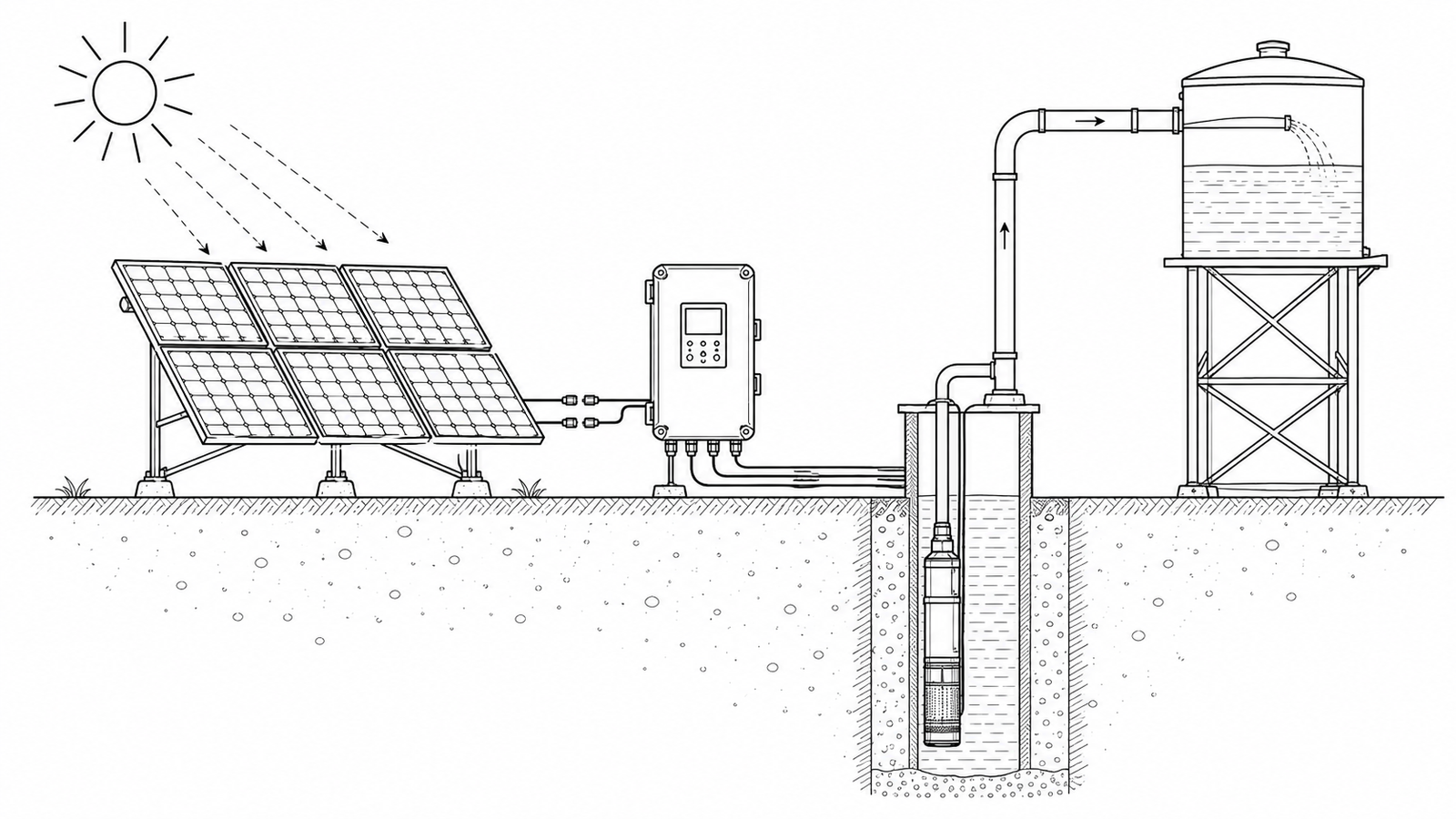
In solar pumping applications, the voltage and current output of the PV array must match the requirements of the pump motor. Unlike standard solar home systems, pumping arrays are often sized specifically to meet the “Total Dynamic Head” (the vertical distance plus friction loss) and the desired daily water volume. Proper mounting structures are also crucial, as they must withstand wind and rain while maintaining the ideal tilt angle for maximum sunlight exposure throughout the year.
The Solar Pump Controller: The System Brain
The controller is arguably the most critical electronic component in modern solar pumping systems. It acts as the interface between the solar panels and the pump motor, regulating the power flow to ensure stable and efficient operation. Advanced controllers utilize Maximum Power Point Tracking (MPPT) technology, which continuously adjusts the electrical operating point of the modules to extract the maximum possible power from the sun, even during cloudy conditions or partial shading.
Beyond efficiency, the controller provides essential protection mechanisms. It monitors the system for faults such as overvoltage, undervoltage, overcurrent, and phase loss. Crucially, it includes dry-running protection, which automatically shuts down the pump if the water source is depleted, preventing catastrophic damage to the motor and impeller. This intelligence allows for fully automated, unattended operation, which is vital for remote installations.
The Water Pump and Motor Assembly
The pump itself is responsible for the mechanical work of lifting and transporting water. Solar pumps are generally categorized into two types based on their installation and application:
- Submersible Pumps: Designed to be submerged directly in the water source, such as deep wells or boreholes. These are ideal for lifting water from significant depths, often exceeding 100 meters, and are protected from surface debris.
- Surface Pumps: Installed above ground, typically near rivers, ponds, or shallow wells. They are easier to maintain but are limited by suction lift capabilities, usually effective for sources less than 10 meters deep.
The motor driving these pumps is increasingly shifting towards Brushless DC (BLDC) technology. BLDC motors offer higher efficiency, longer lifespan, and lower maintenance requirements compared to traditional AC induction motors, as they eliminate the need for brushes and commutators that wear out over time.
System Design Support
Need Help Sizing Your Solar Pump?
Share your water source depth, daily volume needs, and location details. Our engineers will recommend the right components for your project.
Working Principles: From Sunlight to Water Flow
Understanding how these components interact reveals the elegance of solar pumping technology. The process is a seamless chain of energy conversion, managed intelligently to maximize water output.
Step 1: Solar Energy Capture and Conversion
The process begins when photons from sunlight strike the semiconductor material in the PV modules. This interaction generates DC electricity. The amount of power generated is directly proportional to the intensity of the sunlight and the surface area of the panels. In a direct-drive system, this electricity is fed immediately into the controller without intermediate storage.
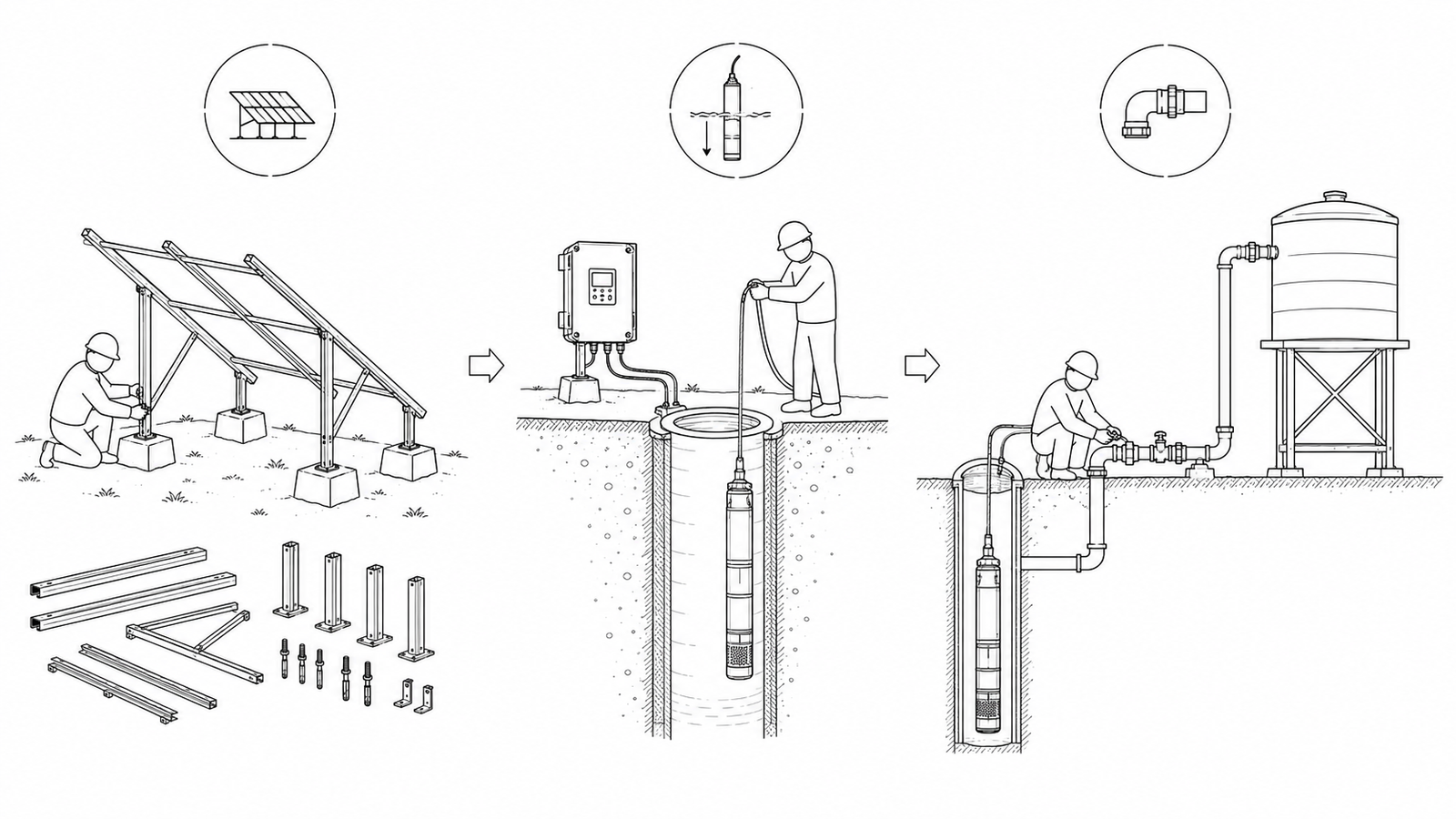
Step 2: Intelligent Power Management
The DC electricity enters the solar pump controller. Here, the MPPT algorithm analyzes the input voltage and current to find the optimal operating point. If the pump requires AC power, the controller may also function as an inverter, converting DC to AC. However, many modern high-efficiency systems use DC motors directly, bypassing the energy losses associated with inversion. The controller ensures that the voltage and frequency supplied to the motor match the available solar power, preventing stall conditions and optimizing speed.
Step 3: Mechanical Water Extraction
Powered by the regulated electricity, the motor spins the pump’s impeller. In submersible models, multi-stage impellers create pressure to lift water from great depths. In surface models, centrifugal force draws water in and pushes it out through the discharge pipe. The speed of the motor, and thus the flow rate, varies naturally with the intensity of the sunlight, peaking at midday and tapering off in the morning and evening.
Step 4: Distribution and Storage
The extracted water flows through piping to its destination. In most agricultural and domestic applications, the water is pumped directly into an elevated storage tank or a ground-level reservoir. This hydraulic storage acts as a “battery,” allowing users to access water even when the sun is not shining. This approach is significantly more cost-effective and reliable than using electrical batteries for energy storage.
Do Solar Water Pumps Need Batteries?
A common misconception is that solar water pumps require large battery banks to operate. In reality, the majority of modern solar pumping systems are “direct-drive” and do not use electrical batteries. Instead of storing electricity, these systems store water.
Using water tanks for storage offers several advantages. It eliminates the high cost, limited lifespan, and environmental hazards associated with lead-acid or lithium-ion batteries. Since water demand often peaks during sunny days (for irrigation and livestock), the direct correlation between solar availability and water need makes battery-free systems highly efficient. Batteries are only recommended in specific scenarios where water must be pumped at night or during extended periods of low sunlight without any storage capacity available.
Advantages of Solar Water Pumping Systems
Transitioning to solar pumping offers compelling benefits over traditional diesel or grid-connected electric pumps:
- Eco-Friendly Operation: Solar pumps produce zero greenhouse gas emissions during operation, contributing to sustainable farming practices.
- Cost-Effectiveness: While the initial investment may be higher, the operational costs are negligible. There is no fuel to purchase, and maintenance is minimal compared to diesel engines.
- Low Maintenance: With fewer moving parts and no engine oil or filters to change, solar pumps require little ongoing attention. BLDC motors further reduce wear and tear.
- Off-Grid Capability: These systems can be installed anywhere there is sunlight, making them ideal for remote rural areas, mountainous regions, and islands where grid extension is prohibitively expensive.
Selecting the Right System for Your Needs
Choosing the correct solar pump involves analyzing several site-specific factors. The total dynamic head (vertical lift plus friction loss) determines the pressure required, while the daily water volume requirement dictates the flow rate. Local solar irradiance data is also critical for sizing the PV array correctly.
For deep wells, a submersible DC pump with a high-efficiency controller is typically the best choice. For shallow sources like rivers, a surface pump may be more accessible and easier to service. It is essential to consult with technical experts to ensure that the pump, controller, and panel array are perfectly matched for your specific application.
Conclusion
Solar water pumps represent a robust, sustainable solution for global water challenges. By understanding the key components—PV panels, intelligent controllers, and efficient motors—and their working principles, users can make informed decisions that lead to long-term reliability and cost savings. As technology advances, particularly in MPPT control and motor efficiency, solar pumping continues to become more accessible and effective for diverse applications worldwide.
Start Your Project
Ready for Reliable Off-Grid Water?
Contact Sunbeam Pump today for expert advice on solar pump components, installation, and maintenance support.