
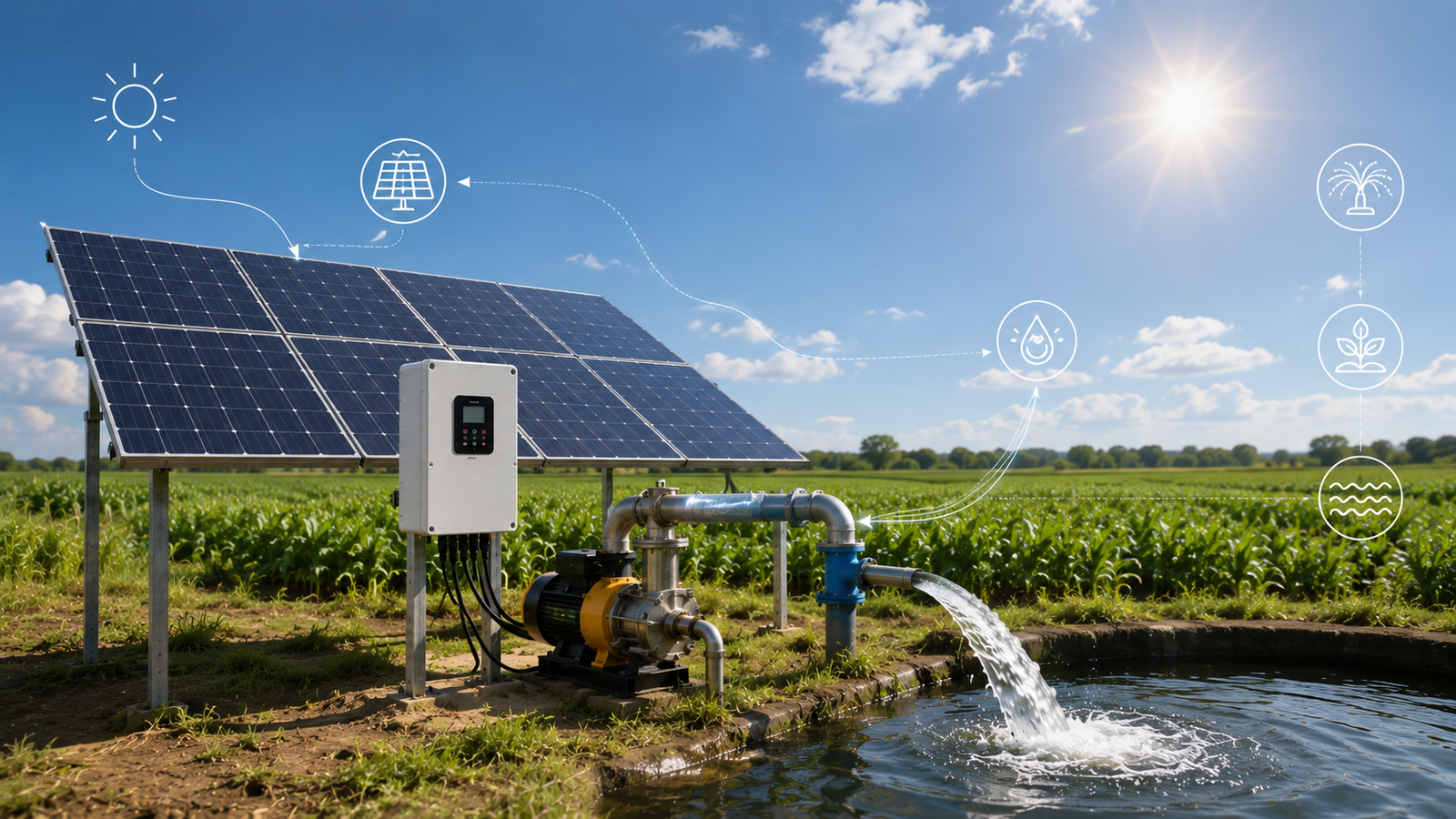
Solar water pumps have revolutionized agriculture and remote water supply by offering a clean, cost-effective alternative to diesel and grid-dependent systems. However, navigating the market can be challenging due to the variety of technologies available. Understanding the specific types of solar water pumps is crucial for selecting a system that matches your water source depth, flow requirements, and budget.
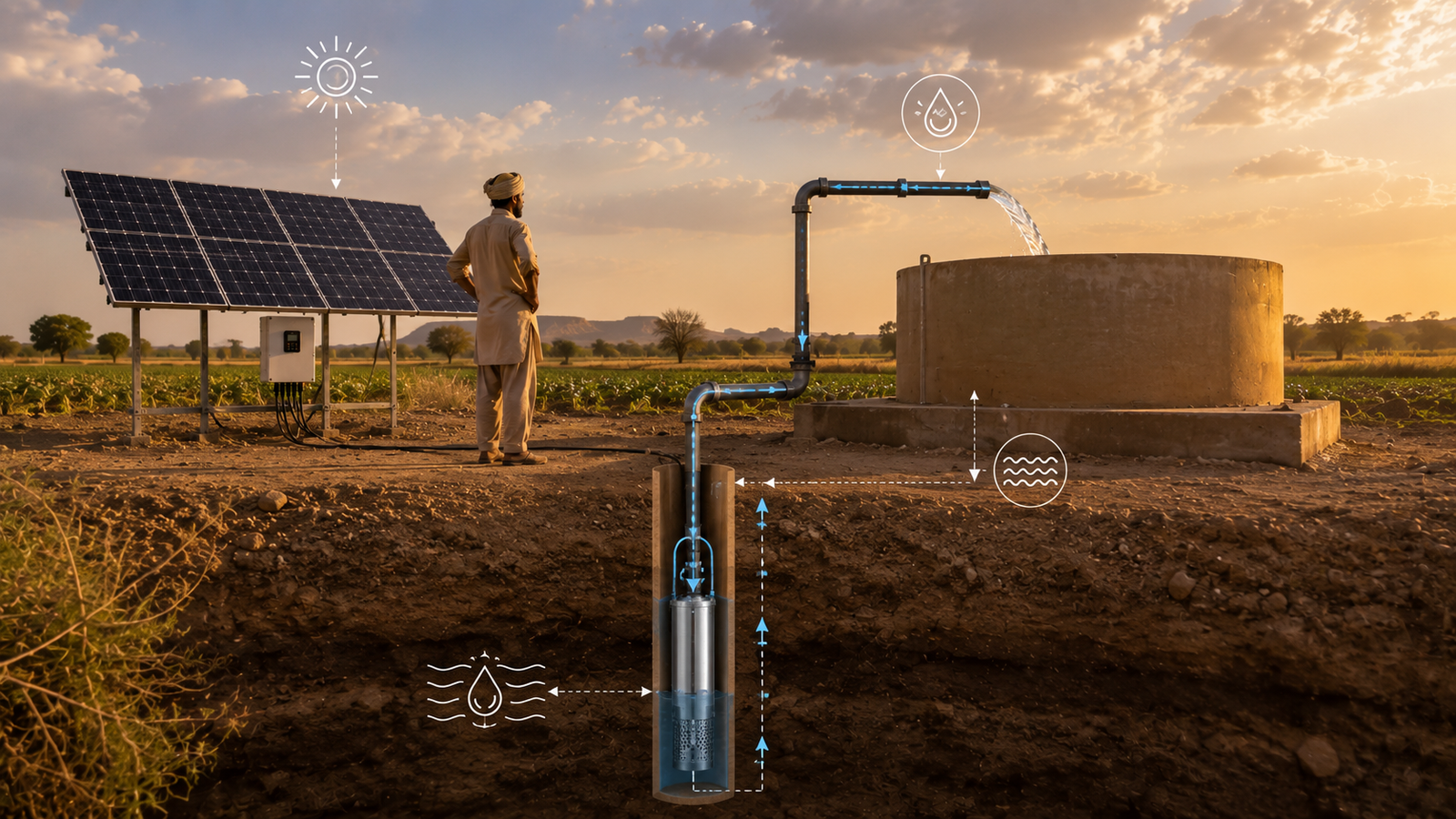
In this comprehensive guide, we break down the four major categories of solar pumps: submersible, surface, DC, and AC. Whether you are irrigating crops in barren hills or providing water for livestock in remote pastures, knowing these distinctions will help you make an informed decision for a sustainable future.
Technical Support
Unsure About Pump Sizing?
Calculating total dynamic head and flow rate can be complex. Share your water source depth and daily volume needs with our engineers for a precise recommendation.
How Solar Water Pumping Systems Work
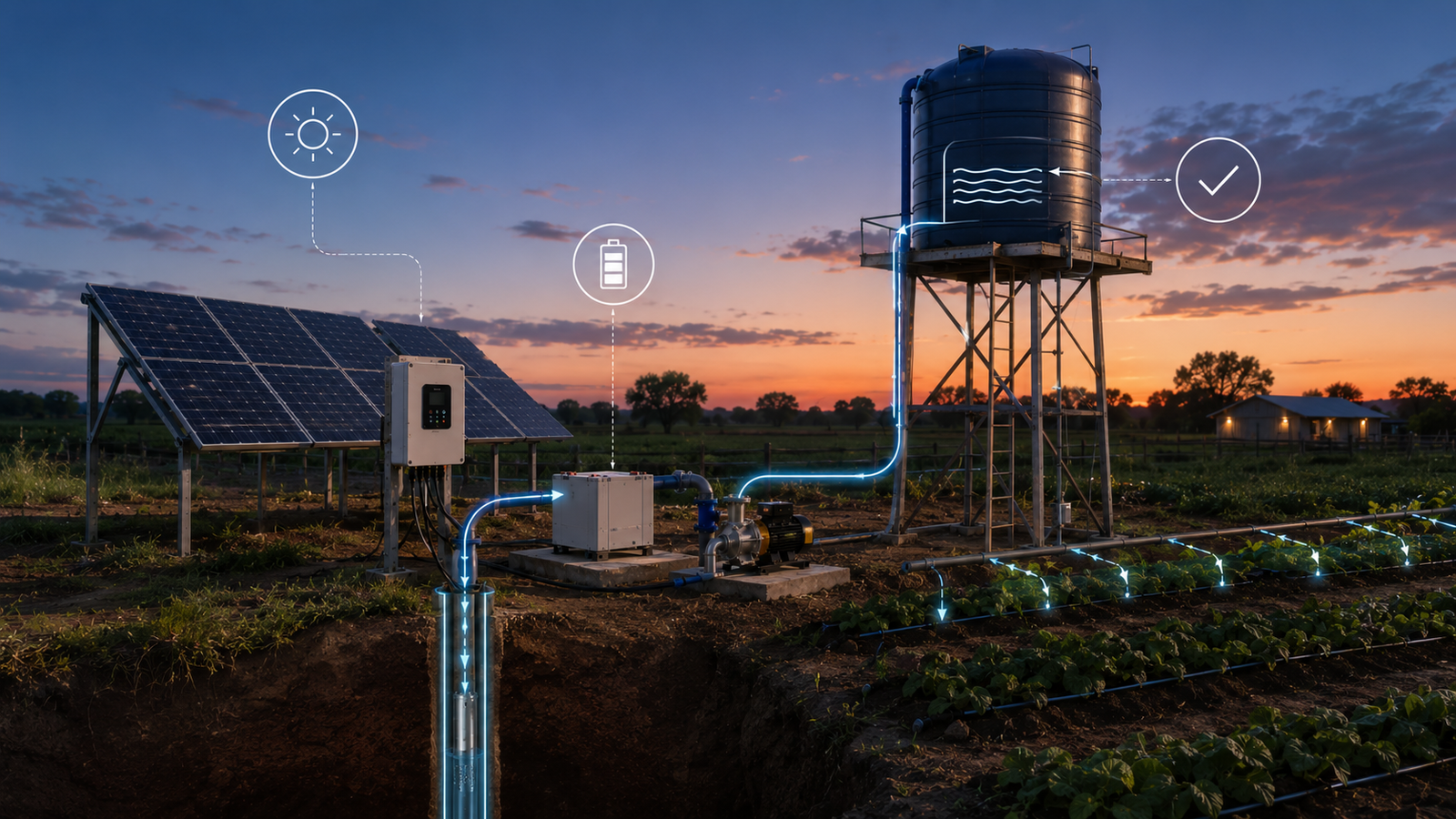
Before diving into specific pump types, it is essential to understand the core components that make up a solar pumping system. Unlike traditional pumps that rely on fossil fuels or grid electricity, solar pumps harness photovoltaic energy to move water.
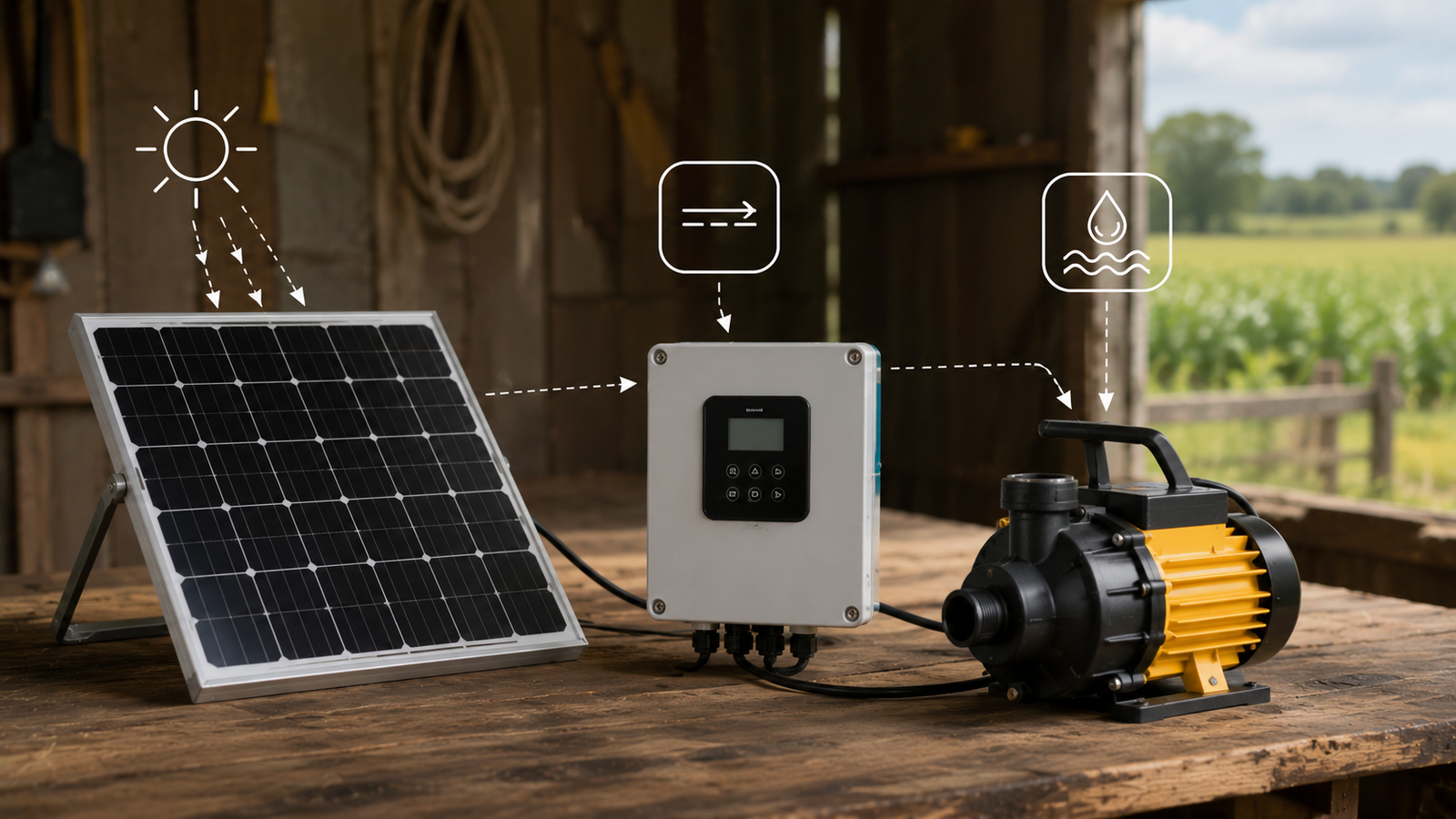
Key Components of a Solar Pump System
- Solar Panels (PV Array): These capture sunlight and convert it into electrical energy. The size of the array depends on the pump’s power requirements and local solar irradiance.
- Pump Controller: This critical component regulates the power supplied to the pump. It protects the motor from damage caused by over-voltage or under-voltage conditions and ensures the pump operates at maximum efficiency.
- The Water Pump: Designed to operate on DC or AC power, the pump draws water from wells, boreholes, or surface sources and delivers it to the desired location.
- Storage and Backup: Many systems include water storage tanks or battery backups to ensure a reliable water supply during periods of low sunlight or at night.
The process is straightforward: solar panels generate direct current (DC) electricity, which is managed by the controller and sent to the pump. The pump then lifts water from the source, providing a consistent flow without ongoing fuel costs.
Classification by Placement: Submersible vs. Surface Pumps
One of the first decisions you must make is based on the physical location of your water source. Solar pumps are primarily classified into two groups based on their placement: submersible and surface pumps.
Submersible Solar Pumps
Submersible solar pumps are designed to be fully submerged underwater, typically in deep wells, boreholes, or ponds. Because they push water rather than sucking it up, they are not limited by suction lift constraints.
- Best For: Deep water sources where the water level is more than 7 meters below the surface.
- Advantages: They are highly efficient for lifting water from great depths and are less prone to cavitation issues compared to surface pumps.
- Applications: Ideal for deep well irrigation, large-scale agricultural projects, and remote community water supplies.
Surface Solar Pumps
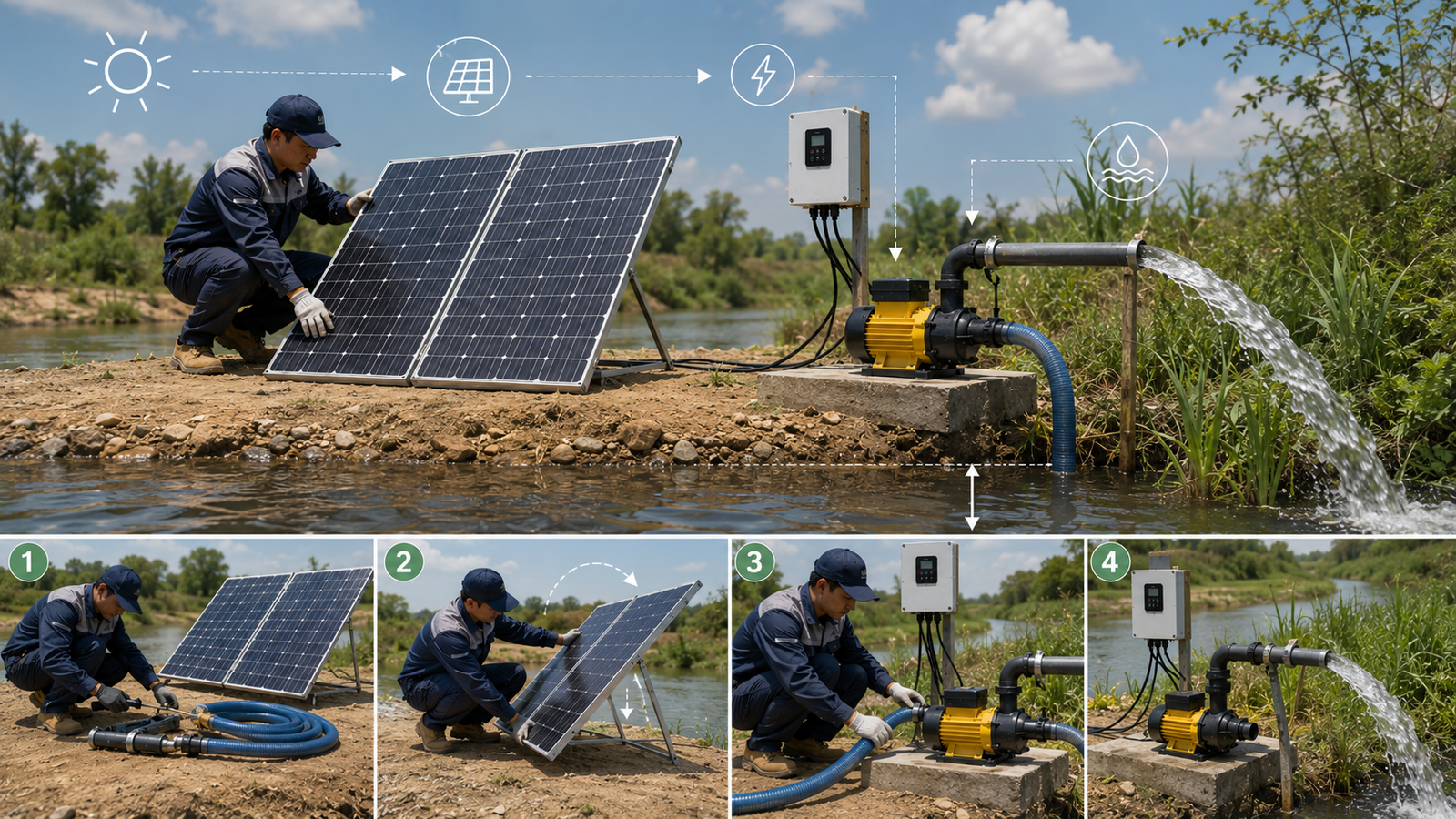
Surface solar pumps are installed on the ground near the water source, such as a river, lake, or shallow well. They work by creating a vacuum to suck water up into the pump before pushing it out.
- Best For: Shallow water sources with a suction lift of less than 7-8 meters.
- Advantages: Easier to install, maintain, and inspect since they are accessible above ground. They are generally less expensive than submersible models.
- Applications: Perfect for small-scale irrigation, livestock watering from ponds, and domestic water supply from shallow wells.
Classification by Power Type: DC vs. AC Solar Pumps
Beyond placement, solar pumps are categorized by the type of electrical current they use. This distinction affects efficiency, cost, and scalability.
DC Solar Pumps
DC (Direct Current) solar pumps are designed to run directly off the electricity generated by solar panels. They do not require an inverter to convert power.
- Efficiency: Higher efficiency because there is no energy loss during DC-to-AC conversion.
- Cost: Generally more affordable due to fewer components (no inverter needed).
- Best For: Off-grid applications, small to medium-scale irrigation, and users seeking a low-maintenance, cost-effective solution.
AC Solar Pumps
AC (Alternating Current) solar pumps require an inverter to convert the DC power from solar panels into AC power. These pumps are similar to standard grid-connected pumps.
- Power: Capable of handling higher flow rates and pressure requirements.
- Versatility: Can often be powered by both solar panels and grid electricity or generators, making them suitable for hybrid systems.
- Best For: Large-scale commercial irrigation, high-head applications, and scenarios where high power output is critical.
Key Applications for Solar Water Pumps
Solar water pumps are versatile and can be deployed in various sectors. Their ability to operate independently of the grid makes them invaluable in remote and off-grid locations.
Farmland Irrigation
In areas without grid access, solar pumps enable farmers to implement efficient drip or sprinkler irrigation systems. This increases crop yields and extends growing seasons, even during dry periods.
Livestock Watering
Ranchers can provide a reliable water source for cattle and other livestock in remote pastures. Solar pumps eliminate the need for manual hauling or expensive diesel generators, reducing labor and operational costs.
Vegetation Restoration and Erosion Control
In barren hills or areas prone to desertification, solar pumps can irrigate vegetation to stabilize soil and prevent erosion. This application is crucial for environmental conservation and land rehabilitation projects.
Remote Community Water Supply
Solar pumps provide safe and secure drinking water to remote communities. By pumping water from underground or surface sources to distribution tanks, they offer a sustainable alternative to trucking water.
Advantages and Disadvantages of Solar Water Pumps
Like any technology, solar water pumps have their pros and cons. Understanding these will help you set realistic expectations.
Advantages
- No Fuel Costs: Solar energy is free, eliminating ongoing expenses for diesel or petrol.
- Low Maintenance: Fewer moving parts and no engine mean lower maintenance requirements and longer lifespan.
- Eco-Friendly: Zero carbon emissions and no risk of fuel spills make them environmentally sustainable.
- Remote Accessibility: Ideal for locations where grid extension is impossible or prohibitively expensive.
Disadvantages
- High Upfront Cost: The initial investment for panels, pumps, and controllers is higher than traditional pumps.
- Weather Dependency: Performance depends on sunlight. However, this can be mitigated with water storage tanks or battery backups.
How to Choose the Right Solar Pump for Your Needs
Selecting the right pump involves analyzing your specific site conditions. Here are key factors to consider:
- Water Source Depth: If your water is deeper than 7 meters, choose a submersible pump. For shallower sources, a surface pump is more cost-effective.
- Total Dynamic Head (TDH): Calculate the vertical distance the water must be lifted plus friction losses in pipes. Higher head requires more power.
- Daily Water Requirement: Determine how many liters or gallons you need per day. This dictates the pump’s flow rate and solar panel size.
- Water Quality: If your water contains sand or debris, ensure the pump is designed to handle solids to prevent damage.
By carefully evaluating these factors, you can select a solar pumping system that delivers reliable performance and long-term savings.
Conclusion
Understanding the different types of solar water pumps is the first step toward a sustainable and cost-effective water solution. Whether you need a submersible pump for a deep well or a surface pump for a pond, and whether you prefer the efficiency of DC or the power of AC, there is a solar option tailored to your needs. While the upfront cost may be higher, the long-term benefits of zero fuel costs, low maintenance, and environmental sustainability make solar pumps a wise investment for farmers and remote communities alike.
Start Your Project
Ready for Sustainable Irrigation?
Switch to solar and eliminate fuel costs. Request a customized quote for a solar pumping system tailored to your farm’s specific water and power requirements.