
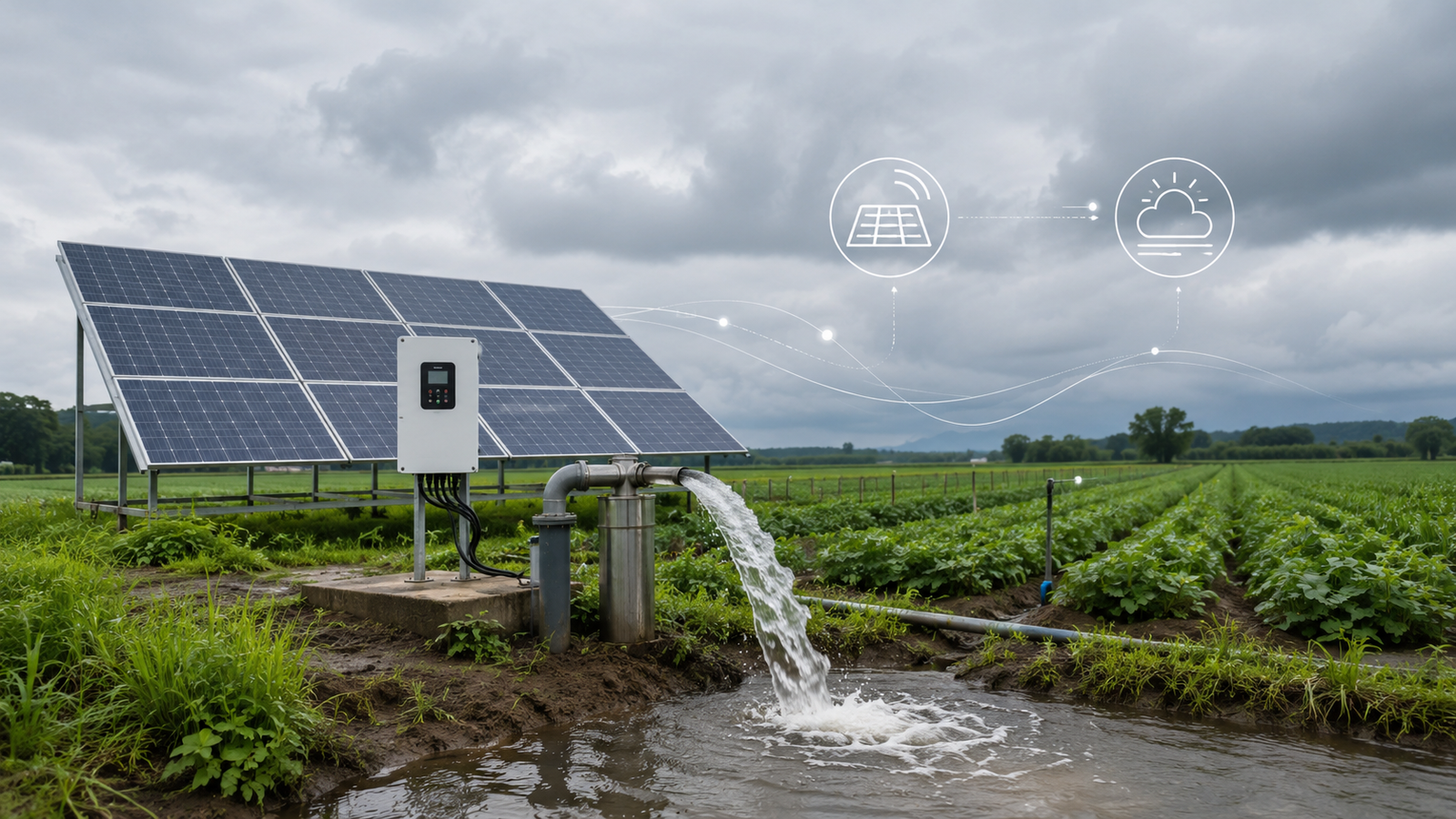
One of the most common concerns for homeowners, farmers, and rural project planners is whether their water supply will remain consistent when the weather turns overcast. The question is simple but critical: do solar water pumps work on cloudy days or low light conditions? The short answer is yes, modern solar water pumping systems are designed to operate efficiently even when direct sunlight is obscured. However, understanding the nuances of performance reduction and the technologies that mitigate it is essential for reliable off-grid water management.
While sunlight is the primary energy source, advancements in photovoltaic technology and motor efficiency mean that a lack of direct sun does not equate to a complete shutdown. In this guide, we will explore the working principles of solar pumps in diffuse light, the hardware differences that define low-light performance, and practical strategies to ensure your water supply remains stable rain or shine.
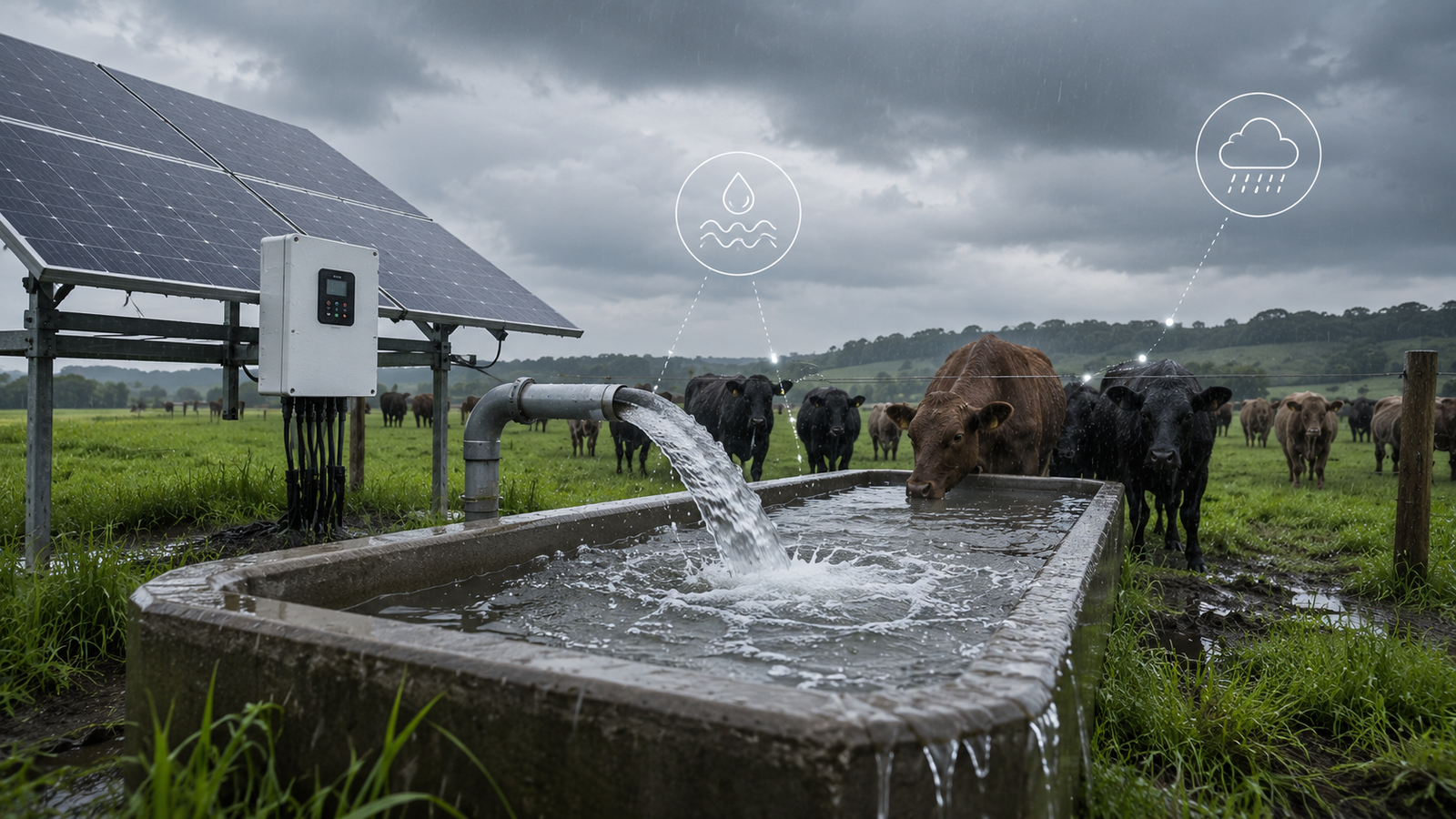
How Solar Water Pumps Work in Low Light
To understand performance in cloudy weather, we must first look at the fundamental mechanics of the system. A solar water pump does not rely on a binary “on/off” switch triggered by bright sun. Instead, it operates on a spectrum of energy conversion that adapts to available irradiance.

The Photovoltaic Effect in Diffuse Light
Solar panels generate electricity through the photovoltaic effect, capturing photons from sunlight. On a clear day, panels receive direct beam radiation. On an overcast day, they capture diffuse radiation—sunlight that has been scattered by clouds, dust, and moisture in the atmosphere. While the intensity is lower, the energy is still present. Typically, high-quality solar panels can produce between 10% and 30% of their rated capacity on a heavily overcast day. This residual power is often sufficient to keep a DC solar pump running, albeit at a reduced speed and flow rate.
The Role of the Solar Pump Controller
The solar pump controller acts as the brain of the system. It regulates the voltage and current from the panels to drive the pump motor. In low-light conditions, the controller’s ability to manage fluctuating input becomes the deciding factor in whether the pump continues to run or shuts down. A sophisticated controller can extract usable power from weak signals, ensuring that even a small amount of sunlight translates into water movement.
System Design Support
Optimize Your Low-Light Performance
Not sure if your current setup can handle extended cloudy periods? Our engineers can analyze your site’s irradiance data and recommend the right MPPT controller and pump combination for reliable flow.
Key Technologies for Better Cloudy Day Performance
Not all solar pumps are created equal. When evaluating solar water pump cloudy day performance, the specific components used in the system play a decisive role. Two technologies stand out as critical for maintaining efficiency in low light: MPPT controllers and Brushless DC (BLDC) motors.
MPPT vs. PWM Controllers
The type of controller used is perhaps the single most important factor in low light solar pump efficiency. Basic systems may use Pulse Width Modulation (PWM) controllers, which simply switch the power on and off to regulate voltage. These are inefficient in low light because they cannot adjust to the changing maximum power point of the solar array.
In contrast, an MPPT solar pump controller (Maximum Power Point Tracking) actively monitors the output of the solar panels and adjusts the electrical load to extract the maximum possible power at any given moment. This is crucial when sunlight is diffuse. An MPPT controller can squeeze every available watt from weak sunlight, allowing the pump to start earlier in the morning, run later in the evening, and maintain operation during cloud cover where a PWM system would fail.
Brushless DC (BLDC) Motors
Traditional AC induction motors require a significant amount of power to start and maintain rotation. Solar-specific pumps, however, often utilize Brushless DC (BLDC) motors. These motors are highly efficient and have a wide voltage input tolerance. For example, a 24V BLDC pump might operate effectively with an input range of 18V to 30V. This flexibility allows the pump to continue running even when the solar panel voltage drops due to cloud cover, preventing the frequent stop-start cycles that can wear out mechanical components.
Monocrystalline vs. Polycrystalline Panels
The choice of solar panel also impacts performance. Monocrystalline solar panels for pumps are generally preferred for low-light conditions over polycrystalline panels. Made from single-crystal silicon, monocrystalline cells have higher efficiency and better performance in diffuse light. They are more effective at capturing scattered photons, making them the ideal choice for regions with frequent cloud cover or rainy seasons.
Practical Strategies to Maintain Water Flow
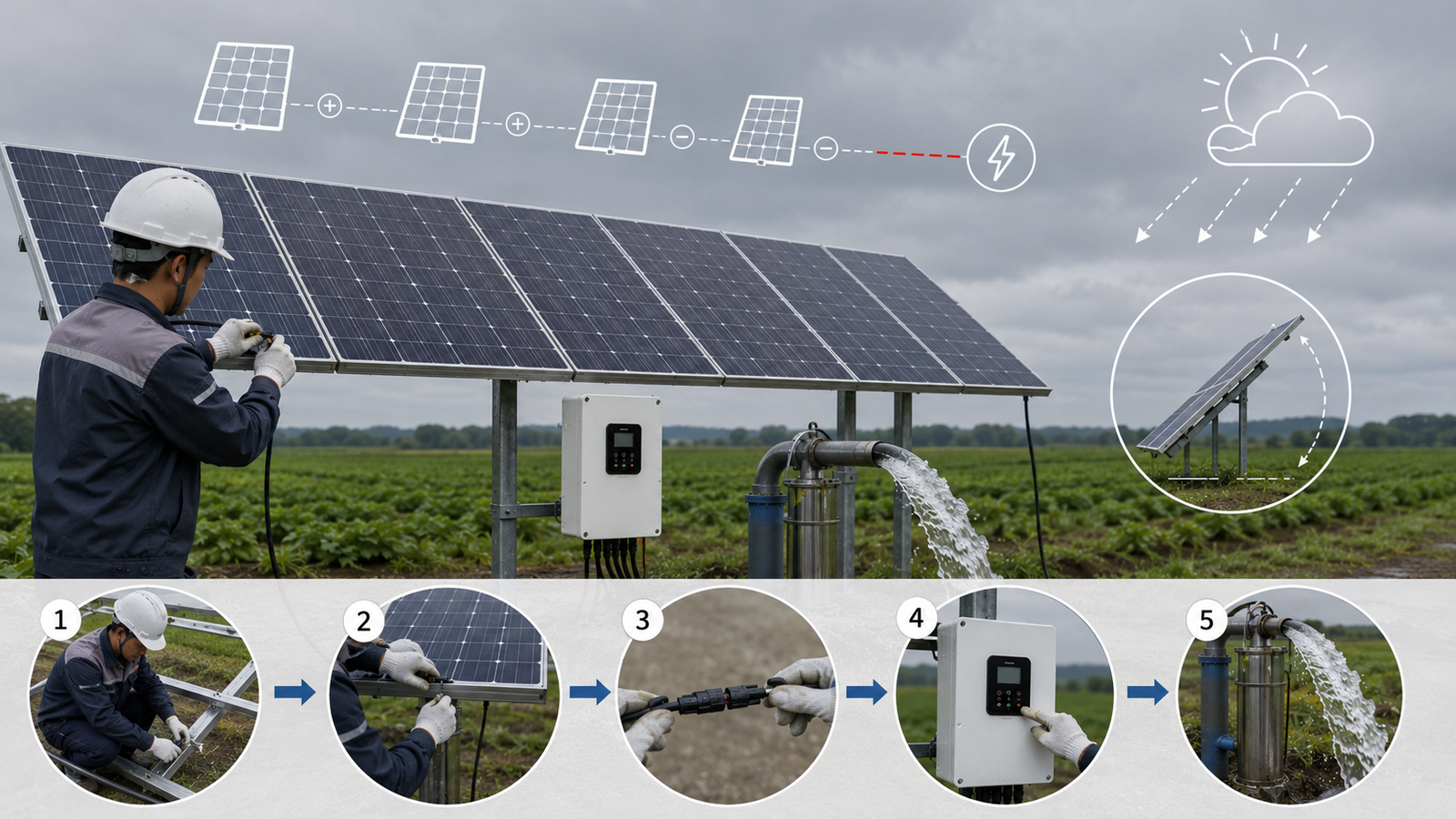
Even with the best hardware, system design is key to reliability. If you are wondering how to keep solar water pump running in rainy season or during extended periods of bad weather, consider these strategic adjustments.
Oversizing the Solar Array
One of the most effective ways to combat low light is to oversize your solar array. By adding 20-30% extra panel wattage beyond what is required for peak sunny conditions, you ensure that the system reaches its minimum operating voltage earlier in the day and maintains it longer into the evening. This extra capacity acts as a buffer, allowing the pump to draw sufficient power even when the panels are operating at reduced efficiency due to clouds.
Water Storage vs. Battery Backup
A common question is: can I add battery to solar pump for cloudy days? While batteries can store energy for use when the sun isn’t shining, they add significant cost, complexity, and maintenance requirements. Batteries have a limited lifespan and require regular replacement.
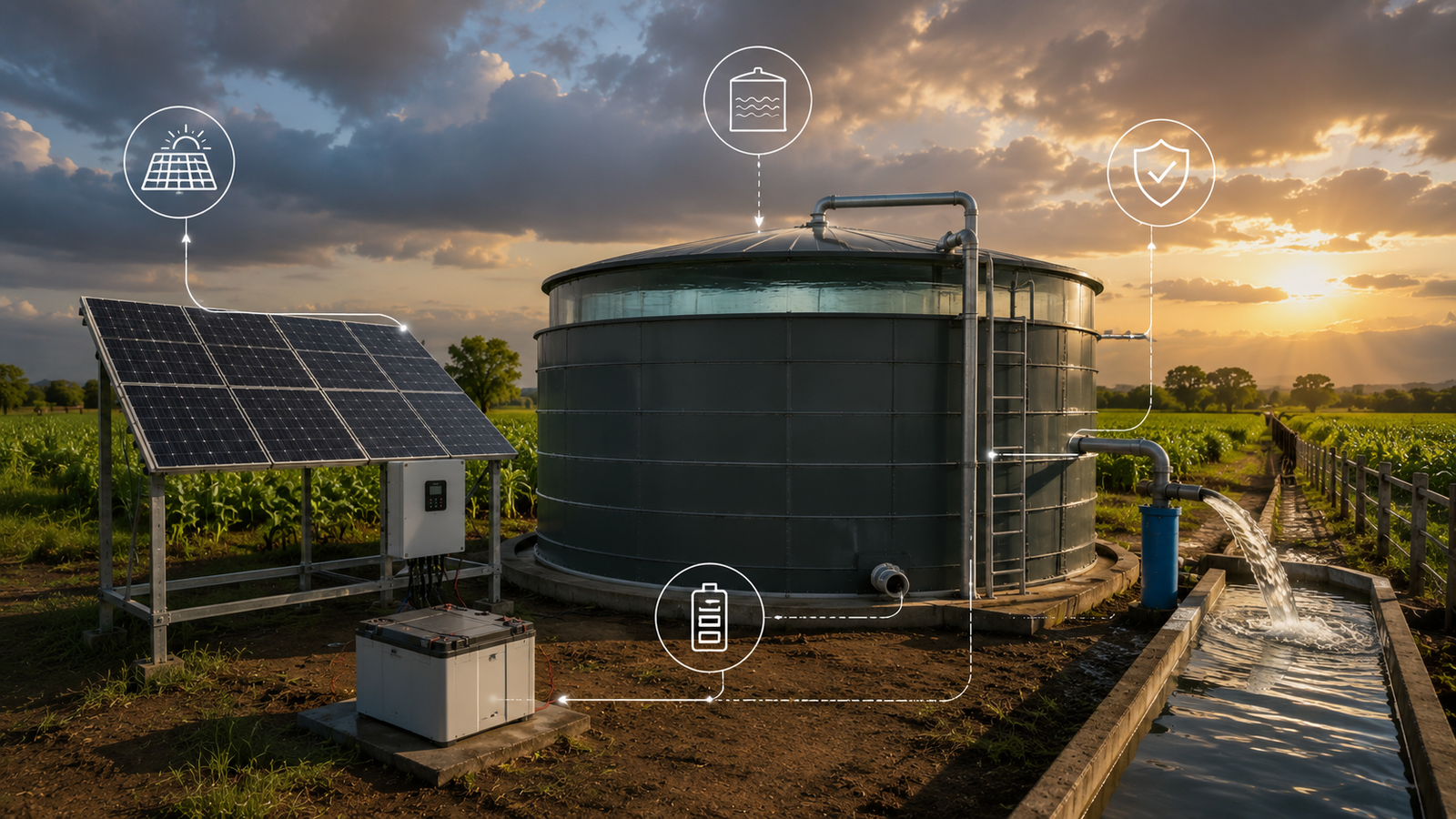
A more robust and cost-effective strategy for most agricultural and domestic applications is water storage. By pumping water into a large tank or cistern during sunny periods, you create a reserve that can last for several days. This approach shifts the storage burden from expensive electricity to inexpensive water. For many users, storing 3 to 5 days worth of water is sufficient to tide them over during cloudy spells without the need for complex battery banks.
Hybrid System Options
For critical applications where water cannot be interrupted, hybrid systems offer the ultimate reliability. These systems can integrate an AC grid connection or a generator backup. When solar power is insufficient, the system automatically switches to the alternative power source. While this increases initial costs, it ensures 100% uptime regardless of weather conditions.
Common Myths About Solar Pumps and Clouds
Misinformation about solar technology can lead to hesitation. Let’s address some common myths.
- Myth: “One cloud stops the pump.”
Fact: Solar pumps are designed to handle variable input. While a thick cloud may reduce flow, it rarely causes a complete shutdown unless the voltage drops below the motor’s minimum threshold. Modern MPPT controllers smooth out these fluctuations. - Myth: “You need batteries to run on cloudy days.”
Fact: As discussed, water storage is often a superior alternative to battery storage for daily water needs. Direct-drive solar pumps can operate efficiently without batteries, reducing maintenance and long-term costs. - Myth: “Solar pumps don’t work in winter.”
Fact: Solar panels actually perform better in cold temperatures, provided there is sunlight. The main challenge in winter is shorter daylight hours and potential snow cover, not the cold itself. Keeping panels clear of snow ensures continued operation.
Choosing the Right Solar Pump for Your Climate
Selecting the best solar pump setup for low light conditions requires a holistic view of your environment and needs. When evaluating options, look for systems that feature:
- Wide Voltage Input: Ensures the pump can run even when panel output is low.
- MPPT Compatibility: Essential for maximizing energy harvest in diffuse light.
- High-Efficiency BLDC Motors: Reduces power consumption and increases reliability.
- Quality Monocrystalline Panels: Better performance in non-ideal lighting.
It is also crucial to consult with experts who can analyze your local irradiance data. A professional assessment can help determine the right balance between array size, pump capacity, and storage volume to ensure your system meets your water demands year-round.
Conclusion
So, do solar water pumps work on cloudy days or low light conditions? Absolutely. With the right technology—specifically MPPT controllers and BLDC motors—and smart system design, such as oversizing the array and utilizing water storage, solar pumps provide a reliable and sustainable water solution even in less-than-sunny weather. The key is not to rely on perfect conditions but to engineer a system that thrives in variable ones. By understanding the capabilities and limitations of your equipment, you can ensure a consistent water supply for your farm, home, or community, regardless of the forecast.
Expert Consultation
Ensure Reliable Water Supply Rain or Shine
Don't let weather uncertainty compromise your water access. Contact Sunbeam Pump for a professional system sizing consultation tailored to your local climate and specific water needs.